- HOME
- E-Learning trends
- Why trust is becoming the currency of digital learning in MEA
Why trust is becoming the currency of digital learning in MEA
- Last Updated : November 16, 2026
- 0 Views
- 8 Min Read


A professional comparing online training programs may find several providers offering similar courses at different prices. One promises an internationally recognized certificate, another highlights the instructor's industry experience, while a third shares testimonials from previous learners. Each offers a reason to enroll, but the professional still needs to decide which provider can deliver the learning experience being promised.
Across the Middle East and Africa (MEA), digital learning is expanding access to educators and training businesses beyond familiar institutions and local markets. A professional in Riyadh can explore courses offered elsewhere in the Gulf Corporation Council (GCC), while someone in Cairo, Amman, or Nairobi can consider programs delivered by institutions they’ve never visited.
Greater choice creates opportunities for educators, but it also makes credibility harder to judge. Learners need to understand who is teaching, whether a certificate carries meaningful recognition, what previous participants experienced, and whether the program can help them achieve their goals.
For training providers, trust increasingly depends on making this evidence visible before enrollment and delivering on those expectations afterward.
Choosing an online training provider: What influences learner decisions?
Training institutes have traditionally built their reputations through local presence, employer relationships, instructor experience, and recommendations. These signals remain valuable, but online learning changes how prospective participants evaluate them.
The 2026 Training Provider Experience Report offers insight into these decisions. Based on 169 respondents, predominantly from Nigeria, the survey found that 76.9% prioritized relevance to real work challenges when selecting a training provider. Learning experience quality followed at 58%, evidence of learning impact at 41.4%, and post-training support at 40.8%. Facilitator credibility was selected by 37.9%, while recommendations or reputation accounted for 15.4%.
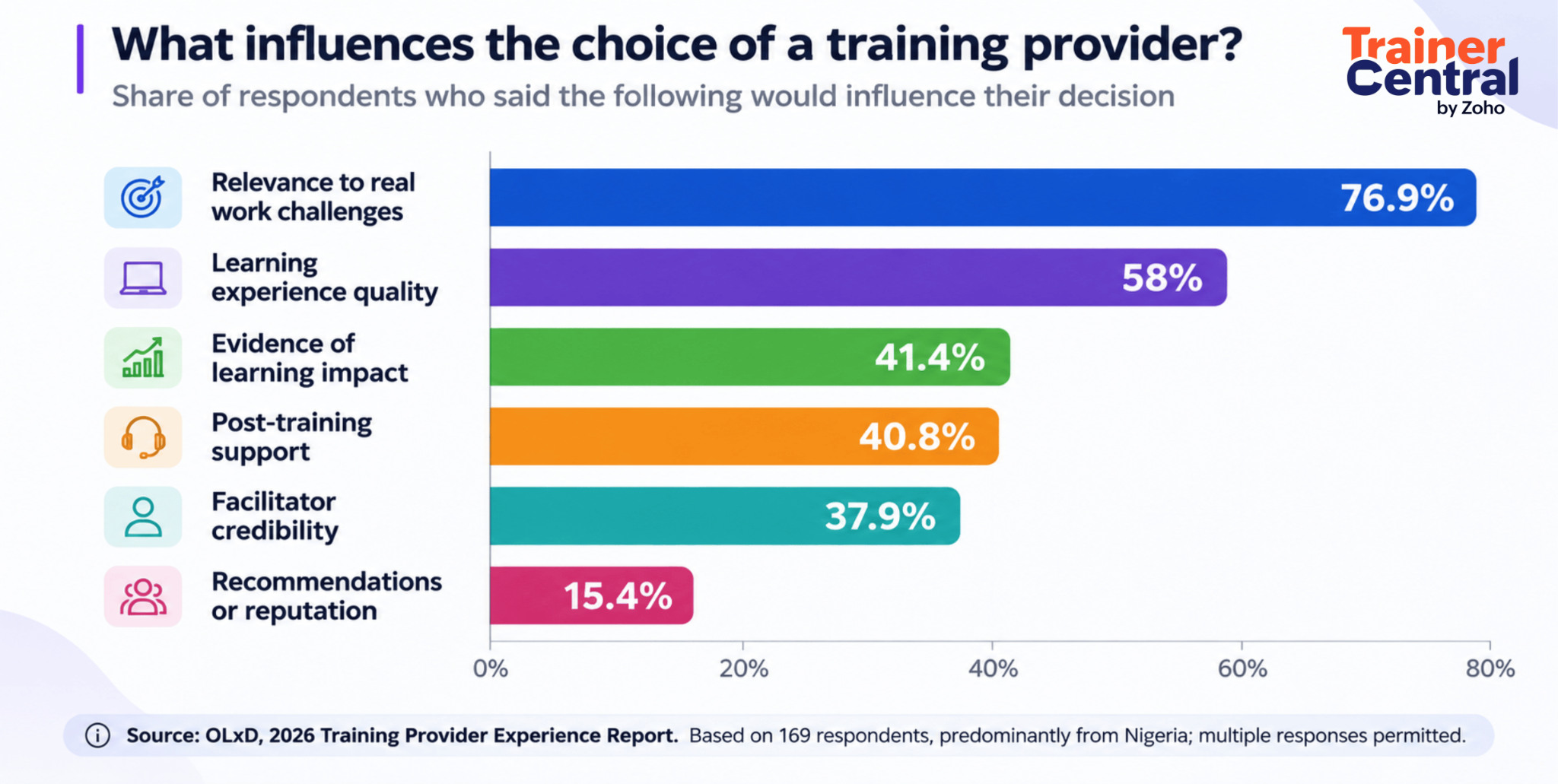
Although the findings cannot represent every MEA market, they reveal an important distinction. Reputation may attract attention, but practical relevance, learning quality, and support provide more concrete reasons to consider a program.
For educators, this means demonstrating credibility through clear course objectives, relevant professional experience, realistic outcomes, and transparent expectations rather than relying entirely on promotional claims.
Online training credibility begins with verifiable credentials
Professional certificates can influence enrollment decisions, particularly when learners want to demonstrate skills to employers. Coursera’s 2025 Global Skills Report recorded a 36% year-over-year increase in professional certificate enrollments across the Middle East and North Africa. While this reflects activity on Coursera rather than the entire regional market, it indicates growing participation in credential-oriented learning.
However, not every certificate carries the same recognition. A participation certificate, an assessed course-completion certificate, and a qualification recognized by a professional authority serve different purposes.
Saudi Arabia’s National eLearning Center establishes quality standards covering course design, learning outcomes, assessment, and learner support within its regulatory scope. In the UAE, Dubai’s Knowledge and Human Development Authority (KHDA) regulates training institutes under the emirate’s Executive Council Resolution No. 50 of 2015. The regulation requires relevant training providers to obtain authorization before offering training activities.
Across Africa, South Africa’s South African Qualifications Authority provides qualification verification services, while Kenya’s Technical and Vocational Education and Training Authority oversees accreditation and registration within its technical and vocational training sector.
These frameworks differ by country and qualification. Their shared relevance is that providers making formal recognition claims should clearly identify the issuing authority, the status of the credential, and how learners can verify it.
What learner research reveals across North Africa and the Levant
Trust in digital learning also depends on how learners experience the technology, instruction, and support behind a course.
In Egypt, a 2022 study of MBA and DBA students examined perceptions of online education. The research found that satisfaction was influenced by factors including learners’ resources and capabilities, illustrating how the conditions surrounding digital learning can shape its perceived value.
Research from Morocco provides another perspective. A study involving 264 university students across 12 universities examined factors associated with eLearning system success, including instructor quality, learner satisfaction, and technology-related concerns.
In Jordan, a survey of 403 participants investigating the adoption of massive open online courses found that perceived usefulness and ease of use positively influenced students’ intention to adopt them.
These studies examine higher education and online learning adoption rather than commercial training-provider purchases, and their findings should be interpreted within those settings. Nevertheless, they show that learner confidence involves more than a provider’s public reputation. Course usefulness, instructor quality, accessibility, and the learning environment all contribute to how digital education is evaluated.
For training businesses operating across the MEA, this reinforces the importance of designing programs around learners’ practical needs while considering differences in digital access, language, and learning expectations.
Instructor reputation and learner reviews make quality more visible
Not every learner is pursuing a regulated qualification. Many professionals enroll in specialist workshops, coaching programs, and short courses to develop skills they can apply immediately. In these situations, an instructor’s practical experience and teaching approach may be more relevant than formal accreditation.
A financial analysis trainer, for example, can demonstrate expertise through a clear professional profile, sample lessons, relevant exercises, and examples of learner work. These details help prospective participants evaluate how the instructor’s experience translates into effective teaching.
Authentic learner reviews provide another perspective. Feedback describing how an instructor explained difficult concepts, responded to questions, or supported practical learning offers more useful information than a generic rating.
In Nigeria, the National Board for Technical Education’s public register provides a formal verification route for relevant institutions and accredited programs. Independent educators outside of these qualification pathways can demonstrate credibility through different evidence, including transparent credentials, genuine testimonials, and examples of completed work.
The distinction matters. Accreditation establishes a particular formal status, while testimonials describe individual experiences. Neither guarantees identical outcomes for every learner, but accurate information helps prospective participants make better-informed decisions.
Learning communities strengthen trust beyond enrollment
A learner’s relationship with an educator doesn’t necessarily end when a course finishes. Discussions, peer learning, and continued access to guidance can help participants apply new skills and maintain professional connections.
Consider a project management course attended by professionals from different industries. Lessons introduce methods and frameworks, while conversations with instructors and fellow participants help learners understand how those concepts apply to real workplace situations.

The Nigeria-led training-provider survey also found that 44.4% of respondents valued opportunities for discussion and peer learning among the positive aspects of their 2025 training experiences. This supports the importance of meaningful interaction, although it does not establish that community features independently drive enrollment decisions.
For educators serving geographically dispersed learners, communities can extend engagement beyond individual sessions. Their value depends on relevant discussions, reliable guidance, and genuine opportunities for knowledge sharing rather than participation numbers alone.
Professional branding should match the learning experience
A recognizable brand, professional website, and well-presented course catalog can create a positive first impression. But credibility depends on whether the educational offering supports the promises being made.
An instructor offering cybersecurity training, for instance, can explain their professional background, identify prerequisites, describe practical exercises, and clarify the skills participants should develop. Transparent fees, realistic learning outcomes, and accurate certificate information further help learners assess whether the course meets their needs.
This principle is reflected in Saudi Arabia’s eLearning standards, which require covered providers to publish essential program information before enrollment, including learning outcomes, admission requirements, assessment components, and expected workload.
Professional branding becomes meaningful when learners can connect an educator’s claims to evidence and experience consistent delivery after registration.
Trust is tested through learner experience and support
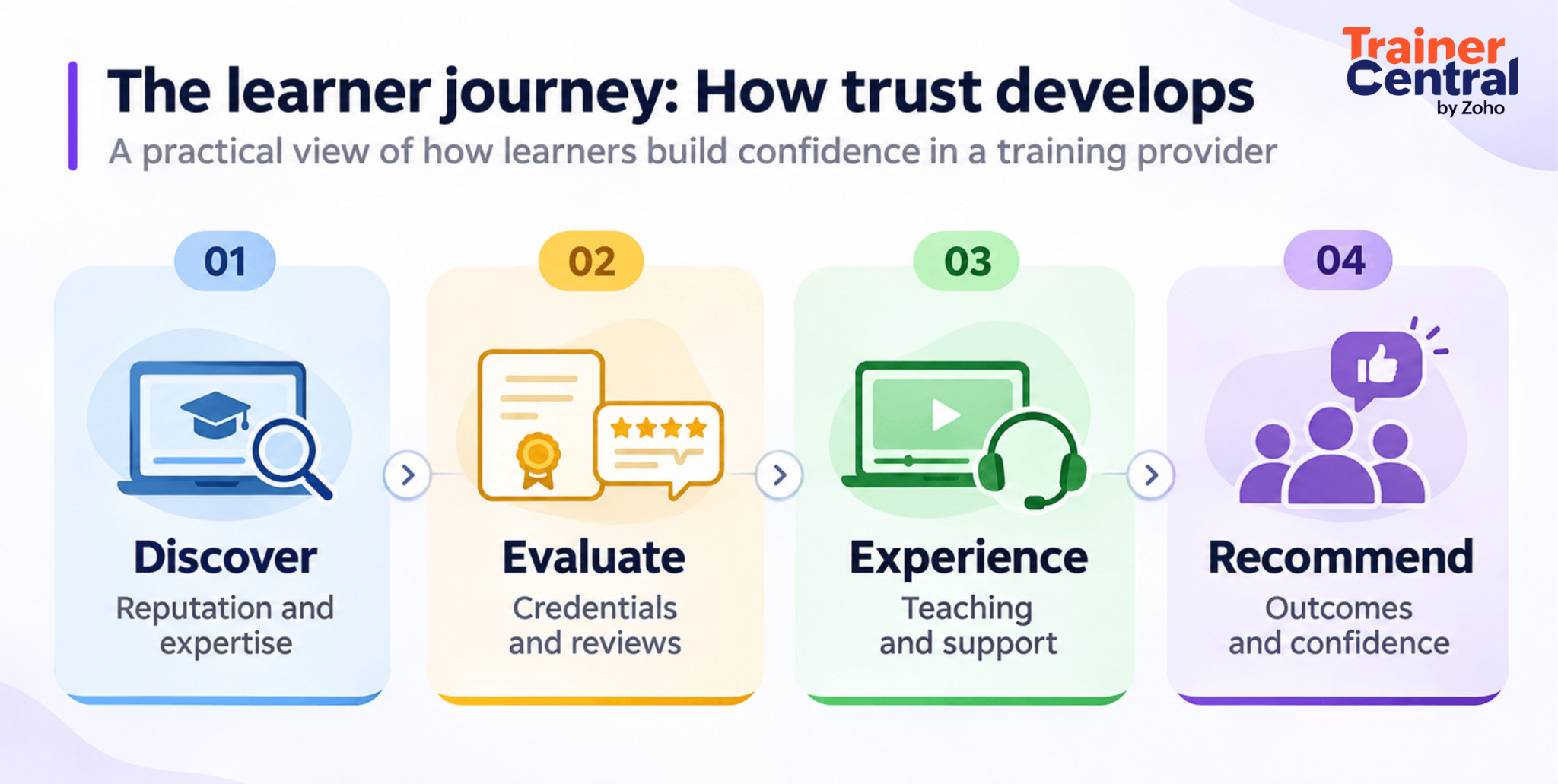
Once learners enroll, the course experience becomes a practical test of the provider’s credibility. Accessible materials, relevant assessments, clear communication, and timely feedback all contribute to whether participants receive the education they expected.
A 2025 study of the Kenya Education Management Institute’s eLearning app surveyed 173 school leaders. Participants appreciated relevant content, supportive facilitators, clear instructions, and interactive learning. Facilitator feedback was particularly well received, with 74.3% reporting high satisfaction, while connectivity and technical difficulties remained challenges.
The findings concern a specific educational program rather than commercial course selection, but they demonstrate how delivery quality and learner support shape the experience.
For training businesses, the lesson is practical. Learners should understand how to access resources, seek guidance, complete assessments, and track their progress. When these expectations are met consistently, participants have a stronger basis for recommending a course or returning for further learning.
Where TrainerCentral fits into building learner confidence
For independent educators and training businesses, establishing credibility involves more than presenting qualifications and testimonials. They also need a professional learning environment that supports the experience promised before enrollment.
TrainerCentral enables educators to build branded online academies where learners can explore courses, access structured content, participate in live sessions, and complete assessments. Bringing these activities into a dedicated environment can help providers maintain consistency across their programs.
For independent trainers, an academy creates a professional destination beyond a social media profile. For established training businesses, it provides a way to organize multiple programs and support ongoing learner engagement.
These capabilities support professional course delivery, but they do not independently establish accreditation, validate instructor qualifications, or guarantee learning outcomes. Trust ultimately depends on the educator’s expertise, transparency, teaching practices, and the experience learners receive.
The future of digital learning depends on confidence
Digital learning gives professionals across MEA more opportunities to discover educators and develop skills beyond their local markets. With that choice comes the need to distinguish credible providers from those whose promises are difficult to evaluate.
The evidence learners need depends on their goals. Someone pursuing a recognized qualification may prioritize accreditation and certificate verification, while a professional seeking practical skills may value instructor experience, authentic feedback, and demonstrable learning outcomes.
For educators, the opportunity is to make these signals visible before enrollment and reinforce them throughout the learning experience. Clear credentials, relevant instruction, meaningful assessments, and reliable support help build a reputation grounded in evidence.
As digital learning becomes more accessible across the MEA, the providers that earn lasting trust will be those whose learning experiences consistently support the promises they make.
FAQ
Why is trust important when choosing an online course?
Learners often evaluate online training providers without meeting instructors or visiting institutions. Clear information about credentials, course quality, assessments, and learner support helps them make informed enrollment decisions.
How can learners verify an online training provider in MEA?
Learners can review instructor qualifications, course details, and relevant regulatory or accreditation registers. Recognition requirements differ by country and qualification, so formal credentials should be checked with the appropriate authority.
Does every online course need accreditation?
No. Accreditation requirements depend on the course, provider, qualification, and applicable regulations. Independent professional development courses may not lead to formally recognized qualifications, but providers should accurately explain the status of any certificates they issue.
How do reviews and learning communities contribute to trust?
Authentic reviews help prospective learners understand previous participants’ experiences. Learning communities provide opportunities for discussion, peer support, and continued interaction with educators, contributing to the overall learning experience.
How can TrainerCentral support a credible learning experience?
TrainerCentral helps educators create branded academies, deliver structured courses, conduct live sessions, manage assessments, and support learner engagement. These capabilities can improve consistency in course delivery, while accreditation and educational quality remain the provider’s responsibility.