- HOME
- Building a business
- How to start selling digital products: A step-by-step beginner guide
How to start selling digital products: A step-by-step beginner guide
- Last Updated : January 7, 2026
- 6.3K Views
- 10 Min Read

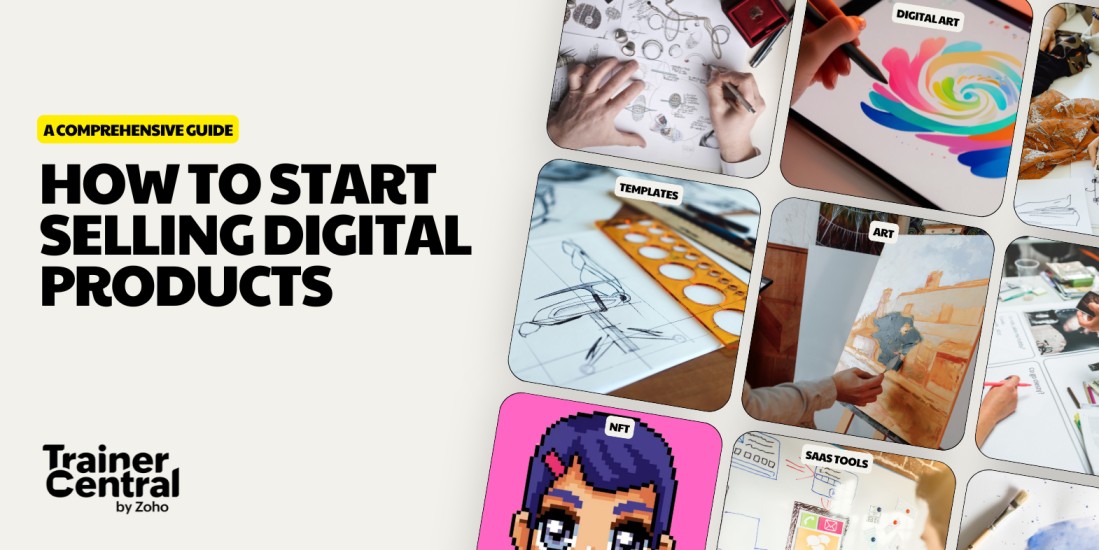
While selling digital products can be profitable, it usually requires consistent effort and time. Many successful sellers only became successful because they make high quality, trendy products that they market every single day.
Unlike physical goods or dropshipping, digital products have major perks. You don't need inventory or shipping, so each sale is nearly pure profit once the product is made. You also own the asset, and your content (like ebooks, online courses, blogs, and videos) keeps driving sales over time, generating passive income. That’s why many see digital products as more scalable and sustainable than a dropship store.
But it’s not all easy money. Products can be pirated or resold by others. Competition is fierce on marketplaces, and, without proper niche focus, it’s hard to break through. Most importantly, income is rarely instant. Many creators take months to earn their first meaningful dollars. In short, don’t expect overnight riches.
In this blog, we'll discuss the realities of selling digital products and show you the steps to start selling them and making a profit.
What are digital products?
Digital products are products that don't occupy physical space and exist primarily in digital form. They can only be sold online either through marketplaces or from your own ecommerce store. Some examples include ebooks, SaaS products, or apps that help people solve a problem or achieve a goal.
The downsides of selling digital products
- Piracy and resellers: Once a digital file is out there, some leakage is almost inevitable. The usual advice is to put a license note on page one and watermark previews. Many platforms, such as TrainerCentral, support dynamic watermarks and encrypt the downloaded files, making piracy a bit hard. However, no matter how careful you may be, you must accept that a few freebies or copies will slip out anyway.
- Stiff competition: Marketplaces like Etsy or Udemy are flooded with digital products. If you launch a generic planner or an online course with no angle, you’ll likely see no sales. There will be a sea of sellers competing for the same generic keywords, so it’s very hard to get any traction.
- Slow income: Don’t expect instant profits. You might need months of tweaking products and listings before seeing steady money. Many creators face one to two months of zero income before anything happens. The keys are patience and learning from each feedback cycle.
- Effort required: Passive income is a long-term goal. In the short term, you’ll still be creating content, engaging on socials, marketing your product, and tweaking ads and listings to drive traffic.
Despite the hype, selling digital products remains worth it if you enter by understanding the above. You can earn meaningful income, but it takes focus, creativity, and consistency. The rest of this guide will show you exactly what to sell, where to sell it, how to find customers, what income to expect, and what traps to avoid.
Step 1: Choose a profitable niche and digital product type
Here are some profitable categories of digital products:
- Educational products: Short, self-study courses or ebooks on niche topics like baking for beginners or healthy meal plans for working adults consistently sell. These require more work up front but can be high value.
- Spreadsheets & templates: Small businesses love trackers and dashboards—such as cashflow templates, inventory logs, and booking schedulers—and individuals buy personal organizers like budget planners, habit trackers, and wedding planners in spreadsheet form. These can be sold on marketplaces or from your own site.
- Design & branding assets: Ready-made design files (Canva templates, social media kits, logo packs, and brand identity kits) are in demand by small businesses and influencers who don’t have an in-house design team. A single well-designed template bundle can generate repeated sales.
- Stock media & creative assets: Photographers and artists sell stock photos, mockup images, Photoshop presets, Procreate brushes, icon sets, sound loops, and music tracks that other creators can use in their own projects.
- Niche tools & micro-SaaS: Tiny web apps or calculators (e.g. a loan calculator or a one-page dashboard) can be sold as digital products. If you have development skills, even a $5–$20 tool can attract many buyers.
The main lesson is to solve a concrete problem for a specific group. This will ensure that people will pay to get that solution.
Step 2: Validate your idea before you build
Marketplace research: Look into marketplaces like Etsy or Udemy. Analyze the top sellers for products similar to yours. You can read the reviews for what buyers love or hate and even use browser extensions or the platform’s search suggestions to gauge demand and competition.
Keyword autocomplete: Type your product ideas into search bars on Google or Pinterest. Autocomplete suggestions and related search volume hint at demand.
Forum conversations: Browse Reddit, Facebook groups, Quora, and more to look for conversations like “I wish there was a template for X” or “How do I solve Y?” These are green lights for creating a digital product around that niche.
Small pre-launch test: Offer a mini version or a freebie of your offering first. For instance, post a free checklist or lead magnet related to your idea and see if people sign up or ask for the full product. (Pro tip: build a mailing list early. Building an email list via a lead magnet is a powerful strategy to launch products later.)
Whenever possible, lean on existing success. For example, when trying to create a planner, study top sellers and then differentiate it with slightly better designs and niche focus. That way, you’re improving on a proven concept, not starting from scratch in the dark.
Step 3: Design a sample first product
Your first product doesn’t need to be perfect. In fact, it shouldn’t be. Launching a basic version that focuses on solving one problem is the key. Customers care about the result your product gives them (like being organized or saving time) more than having slick graphics.
A lean product is also easier to build and update. You can get feedback faster and iterate instead of spending months on a giant course that nobody buys. It’s also easier to push a small product live—you’ll overcome analysis paralysis and can start learning from real sales.
When creating your sample product, focus on clarity and usability. Include a very clear outcome or use case (e.g. “A filled-out weekly meal planner to save you time”), not just a pretty design. Provide simple instructions so buyers aren’t confused.
Add basic protections against casual theft without obsessing. You can include a license note on the first page that your file shouldn't be resold or redistributed. Also, consider adding a light watermark on preview images, or put your name, brand, or small logo somewhere. These won’t stop pirates, but they’ll discourage most would-be resellers.
Step 4: Choose the right platform to sell on
The right platform to sell your digital products on depends on your goals and context. Here are a few options:
Marketplaces
Using a marketplace, such as Etsy, Creative Market, or Udemy, for selling your digital product means you can utilize the built-in traffic and audience. People already go there to buy templates, planners, and graphics. For beginners with no following, this means you can start selling without doing your own ad campaign.
However, there will be fierce competition and algorithm dependence. You might also have to pay hefty sales commissions and will have limited control over branding and communication.
Related Article: Struggles faced by online course creators in Marketplaces
Overall, marketplaces can jump-start sales, but expect to spend time on SEO and visuals to stand out among the huge competition.
Creator platforms
These platforms, like Gumroad and Payships, are great for selling directly from social media, blogs, or email. Most have low monthly fees or take a small commission. They also handle payment and file delivery securely.
But these platforms have no built-in audience. If you just list products there, no one will find them without your promotion. You’ll need to drive traffic via content marketing or paid ads.
These platforms are excellent once you have an audience, but they rely entirely on you to bring customers.
Your own store or website
Platforms like TrainerCentral, Shopify, and Zoho Commerce offer you full control and branding. You own your email list and customer data. There are little to no transaction fees if you use a payment gateway directly to sell using these platforms.
You must rely on your own marketing efforts to drive traffic, but you can build your own brand using these platforms.
Things to note:
- If you’re selling to customers in India or using Indian platforms, be aware of payment issues. Not all global platforms support UPI or local wallets.
- Always factor in pricing psychology: what seems affordable in USD may be too expensive in INR. Consider the purchase power parity while pricing your courses.
Step 5: Set smart pricing and offers
Step 5: Set smart pricing and offers
When you’re starting, small digital products (like simple templates or mini courses) in the $5–$30 range are often easiest to sell. They’re low-risk for buyers and faster to create. For new sellers, it's advisable to not overthink the price. Even a $7–$10 template can generate momentum. You can always raise prices later. Starting small also lets you bundle and test without big customer objections.
As you grow, look for opportunities to increase revenue per customer. Bundle similar items (e.g. five related planner pages or a series of courses) at a discount. Add upsells, like advanced packs or a one-on-one coaching add-on. The key is to add value and not just increase prices randomly. Once you have a few positive reviews and testimonials, you can gradually increase your prices without losing sales.
But make sure not to undercut yourself or try to to be the cheapest. Instead, justify higher prices by offering added benefit. Also, remember to adjust for market differences—a $100 course is normal in the US but may need to be much lower for some countries.
What income can you realistically expect?
Here's a realistic spectrum:
Side hustle: Early on, you can expect $50–$300 per month from one or two products. Remember: this is money for minimal ongoing work.
Growing business: If you keep iterating your product based on feedback, spend money on marketing, and dedicate a bit more time, you can earn $2,000–$10,000 per month.
Full-time: If your product starts getting more adoption or caters completely to a niche, then you could have five- or even six-figure months
The aim is to start slow, collect feedback, improve your product and finally hit the 6-figure mark.
Step 6: Get your first 10–100 customers
Now that you have a product and a platform to host it, it’s time to drive sales. You can use a mix of tactics:
The Funnel Apporach: Create value for prospects that you can offer for free. For example, post TikTok and Instagram tips or even a free webinar related to your niche. Here you can offer free goodies like a checklist or mini-template in exchange for their email addresses. Using this method, you can easily build an email list with lead magnets. This nurtured funnel can turn followers into customers more reliably than a one-off ad.
Platform SEO: Optimize your listings on whatever platform you use. Use rich keywords in titles and tags, and write descriptions that clearly present the problem and solution. Create thumbnail images showing the before and after or a filled-out example of your product for a strong visual pitch. On blogs, use keyword-rich blog posts or landing pages. Platforms like TrainerCentral let you create beautiful websites without writing a single line of code and list your online courses and workshops. Keyword research tools like Semrush, Ahrefs, or Google’s autocomplete can reveal the phrases buyers use.
Focused audience launch: Launch your products directly to a small, engaged audience. Use your social media space to post helpful content in a niche, and learn exactly what your followers ask for. Even if you’re a beginner, sharing what you know about your niche can create a warm audience.
Collaborations & affiliates: Don’t underestimate partnerships. Write a guest post for a niche blog (linking to your product) or swap newsletter promos with another creator. You can also set up an affiliate program (even as simple as 20–30% commission) so others promote your product for you.
By combining these methods, you can steadily gain those first crucial customers.
Common mistakes beginners make
Learning from others’ failures is just as helpful as studying successes. Here are pitfalls many new sellers encounter:
Generic, saturated products: Creating a generic daily planner or budget spreadsheet with no twist is almost guaranteed to flop. Without a clear niche or unique benefit, your product blends into the thousands already listed.
Upload and forget syndrome: Simply listing a product and doing no promotion often results in no sales. Success stories always mention consistent marketing, such as Pins, TikTok videos, email newsletters, or SEO tweaks. Treat your online shop like a little business, not an one-off asset.
Quitting too early: It’s very common to give up after one or two months with only a few sales or no sales at all. If you only listed a handful of items and stopped after a couple of months, you probably cut yourself off before the products had a chance to rank or gather reviews. Give each product time to take root. Tweak the keywords or thumbnails, test a small ad, or double-down on the ones that get any interest.
Ignoring feedback & overcomplicating: Early on, listen to what buyers (and browser behavior) tell you. If a buyer asks a question about how to use something, add clearer instructions. If a product is too complex, simplify it. Also, be generous with refunds. A clear and fair refund policy builds trust and prevents bad reviews and future friction. Always remember that a happy first customer is more valuable in the long run than a few extra dollars today.
Selling digital products can help you generate a stable stream of passive income. However, like any other job, it still requires consistent effort. People pay when you help them solve a problem or achieve a goal, so it’s a green flag when your product does either of these. Because every audience is unique, regularly gathering feedback and refining your product will help you stay relevant and differentiate yourself in a crowded market.