- HOME
- Building a business
- How to create an engaging ebook for your online course
How to create an engaging ebook for your online course
- Last Updated : July 28, 2025
- 471 Views
- 6 Min Read

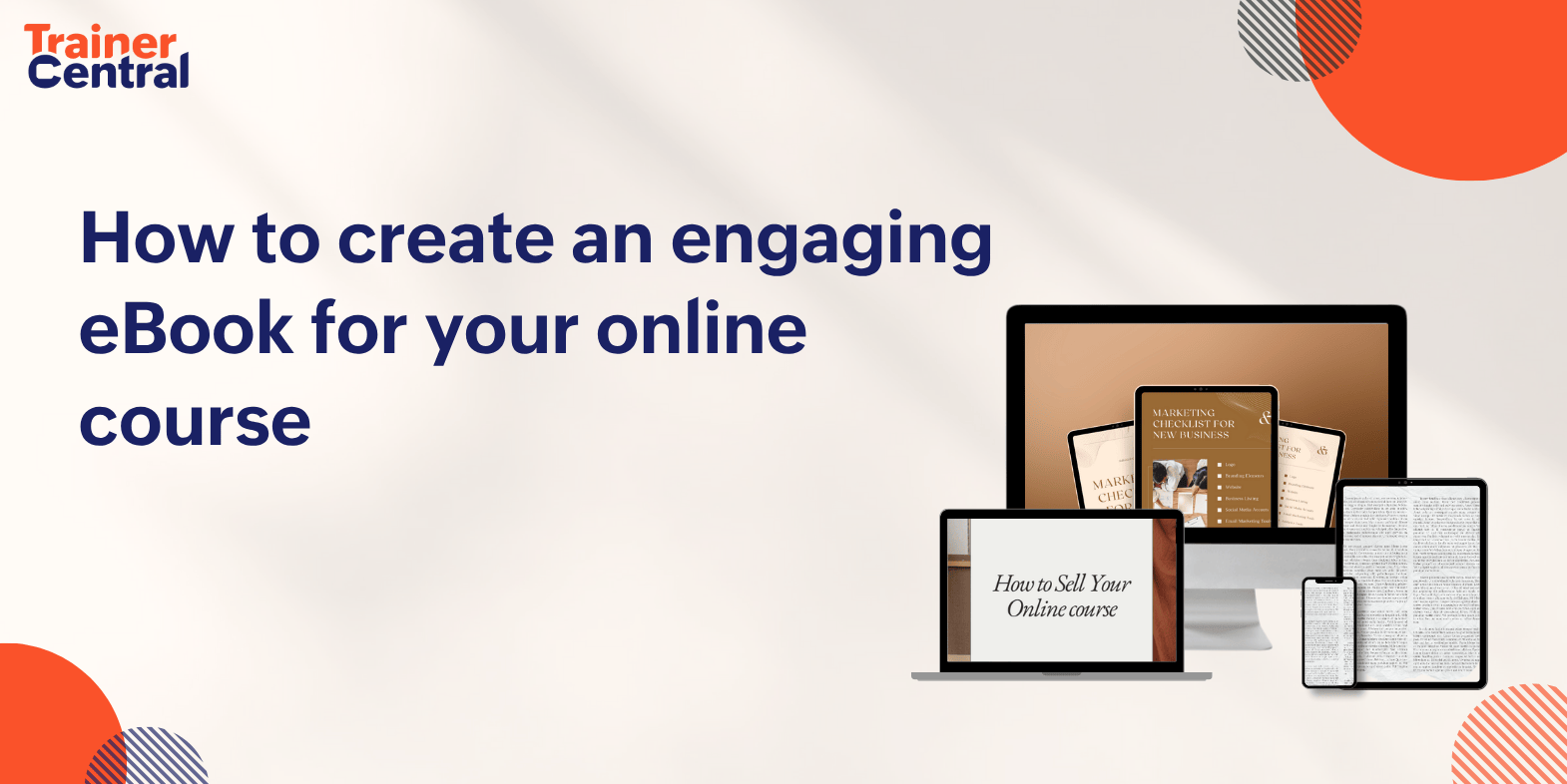
In today’s competitive online learning space, course creators are constantly seeking new ways to deliver value and foster deeper connections with their learners. Among the most powerful tools in a course creator’s toolkit is the ebook. It’s more than just a digital document; it’s a bridge between your course content and your audience’s daily lives, providing a portable, accessible, and practical way to continue learning beyond the virtual classroom.
An ebook isn’t merely a supplement to your course, it’s a potent asset for building your authority, growing your community, and generating additional revenue. In this blog post, we’ll explore every aspect of creating an ebook from its fundamental purpose to the intricate details of crafting, designing, and monetizing it effectively. Whether you're a seasoned instructor or new to course creation, this blog post will equip you with the clarity and tools to publish a high-quality, engaging ebook that truly serves your learners.
Understanding the ebook
An ebook is a digital book designed to be read on electronic devices such as laptops, tablets, e-readers, and smartphones. Popular formats include PDF, ePub, and Mobi, with PDF being the most common due to its universal compatibility and ease of use.
What makes an ebook truly valuable in the education space is its ability to blend structured learning with ease of access. According to Statista, the global ebook market is expected to surpass $15.87 billion by 2030, showing how deeply digital reading has been integrated into everyday life. For online course creators, this presents an exciting opportunity not just to educate, but also to expand their reach, as students increasingly seek learning materials they can revisit on their own time and terms.
The benefits of writing an ebook
One of the greatest advantages of an ebook is that it allows learners to engage more deeply with your course material. While videos and live sessions are excellent for interactive learning, they often require a certain level of focus and time commitment. An ebook, on the other hand, allows your students to study during commutes, breaks, or even offline.
Publishing an ebook establishes your credibility as an educator. When students see that you’ve taken the time to curate your knowledge into a cohesive digital publication, it demonstrates your commitment to their success. This perceived authority can directly impact your course sales and overall brand trust.
Additionally, ebooks serve as highly effective lead magnets. Research from HubSpot shows that over 27.7% of marketers use ebooks to capture leads, making them one of the most successful content formats for growing email lists. For course creators, this means you can offer your ebook as a free or low-cost resource in exchange for email addresses, nurturing those leads into full course customers.
Finally, an ebook can act as a standalone product that generates passive income. With minimal ongoing maintenance, you can sell it through your website or platforms like Gumroad, allowing you to earn revenue long after you’ve finished writing it.
Who should consider creating an ebook?
One of the biggest myths about ebooks is that they’re only for authors or advanced writers. In reality, ebooks are an ideal medium for anyone who has valuable knowledge to share. If you’re passionate about teaching and already have structured course materials, you’re more than capable of creating an ebook. The process doesn’t demand a publishing background or advanced technical skills. All you need is a clear understanding of your students' needs, a willingness to organize your ideas, and the commitment to polish your work into a high-quality resource.
Planning your ebook strategy
Before opening a blank document, it’s essential to approach the creation process with a clear strategy. The first step is defining the core purpose of your ebook. Ask yourself: Is this meant to be a companion guide for your course? A standalone product? A lead magnet to grow your audience?
Once you’ve clarified its purpose, turn your attention to your audience. Identify their pain points and learning goals. The more precisely you understand your readers’ needs, the easier it will be to write something truly useful.
Competitor research can also offer valuable insights. Look at other course creators in your niche, what types of ebooks are they offering? How are they positioning them? This doesn’t mean you should copy their approach, but it will help you spot gaps or opportunities.
Finally, map out the learning outcomes you want your ebook to deliver. This ensures that every section of your book is purposeful and aligned with your readers’ goals.
Step-by-step process to creating your ebook
Step-by-step process to creating your ebook
Step 1: Plan your content
Start by brainstorming the main topics you want to cover. Consider questions your students frequently ask or areas where they tend to struggle. From there, build a rough outline that organizes these topics into a logical, easy-to-follow structure.
Your table of contents should reflect a smooth progression, starting with foundational concepts and gradually moving toward more advanced material. Each section should feel like a natural step in the learning journey.
Step 2: Write your first draft
Now comes the writing stage. Don’t worry about perfect phrasing or flawless grammar in the first draft. The goal here is to get your ideas onto the page in a clear, conversational manner.
Keep your writing approachable yet professional. Aim to explain concepts simply, as if you’re guiding a friend through the topic. Use real-life examples wherever possible to make abstract ideas more relatable.
Resist the urge to over-explain or over-complicate. Instead, focus on breaking down complex topics into bite-sized, actionable insights.
Step 3: Edit for clarity and impact
Once your draft is complete, take some time away from it before editing. This break will help you return to your work with a fresh perspective.
During editing, look for opportunities to simplify your language, strengthen your transitions, and clarify your message. Consider using editing tools to refine your writing.
Step 4: Design and format your ebook
The design of your ebook plays a huge role in its overall impact. A poorly designed ebook, no matter how insightful, can quickly lose readers’ attention.
Focus on clean, consistent typography, a readable color scheme, and ample white space. Incorporate your brand’s colors and logo to reinforce your visual identity.
Don’t forget to include high-quality visuals such as infographics, diagrams, or screenshots where appropriate. These elements break up text and help illustrate key points.
Step 5: Test and gather feedback
Before publishing your ebook, it’s crucial to test it on multiple devices. Check how it looks on desktops, tablets, and smartphones to ensure readability.
Share your draft with a small group of trusted peers, students, or beta readers and ask for honest feedback. Use their insights to make necessary adjustments, then export the final version in a widely accessible format like PDF.
Designing for better engagement
Design isn’t just about looks; it’s about enhancing the reading experience. A well-designed ebook should guide readers naturally through the content and encourage them to keep turning pages.
Incorporate interactive features, such as clickable links, checklists, and worksheets wherever appropriate. These additions not only make your ebook more engaging but also encourage readers to apply what they’re learning.
Visual consistency is key. Maintain uniform headings, colors, and typography throughout the document. And most importantly, ensure that every design choice supports the reader’s ability to focus on and absorb the content.
Monetizing your ebook
An ebook isn’t just an educational tool, it’s also a profitable digital product that can complement or even stand apart from your course offerings.
Sell it directly on your website
Platforms like Gumroad and WooCommerce allow you to sell digital products directly from your site. You can offer your ebook as a standalone product or bundle it with other resources. Pricing can range anywhere from $10 to $50, depending on the depth and exclusivity of the content.
Offer it as a lead magnet
If your priority is audience growth, consider offering your ebook for free in exchange for email addresses. This strategy helps build a highly targeted mailing list that you can nurture with newsletters, course offers, and other promotions.
Bundle it with courses or memberships
Bundling your ebook with your online course or membership community adds value to both products and often increases sales conversions.
Create licensing deals
For advanced monetization, you can license your ebook to other educators or companies in your field. This allows them to resell or distribute your ebook under agreed terms, creating another revenue stream.
Wrapping up
Creating an ebook is more than just assembling text and graphics. It’s an intentional, strategic process that allows you to serve your audience on a deeper level while growing your business.
Whether your goal is to support your existing students, attract new ones, or open up a new revenue stream, an ebook is a versatile and highly rewarding tool. Start by focusing on clarity, simplicity, and value. Stay true to your teaching voice, and remember that your ebook doesn’t need to be perfect from the outset. With each edition, you’ll refine your approach and deepen your connection with your audience. In the world of digital education, a well-crafted ebook isn’t just another asset—it’s a gateway to greater impact, influence, and income.