- HOME
- Building a business
- Six characteristics of a scalable learning platform for enterprises
Six characteristics of a scalable learning platform for enterprises
- Last Updated : September 17, 2026
- 0 Views
- 6 Min Read
Rapidly growing enterprises operate in a near-constant state of change. We’re talking about workforce developments, evolving business policies, shifting customer expectations, regulatory requirements, and more. Organizations that thrive in this environment are those that can adapt and scale without sacrificing operational efficiency.
But scalability isn’t just about infrastructure, headcount, or operational capacity. It also depends on how effectively an organization can keep its workforce aligned with changing business needs. As priorities evolve, employees need access to the knowledge, skills, and updates required to stay productive and contribute to organizational goals.
This is where learning and development plays a critical role. Enterprises invest heavily in training programs to onboard new hires, upskill employees, communicate business updates, and support ongoing professional development—and that investment is only growing. U.S. training expenditures alone reached $102.8 billion in 2025, up nearly 5% year-over-year. As these training initiatives grow in scale and complexity, organizations need a learning platform that can grow alongside them.
So what exactly makes a learning platform scalable? Let’s look at the characteristics that enable enterprises to expand their training programs without any unnecessary complexity.
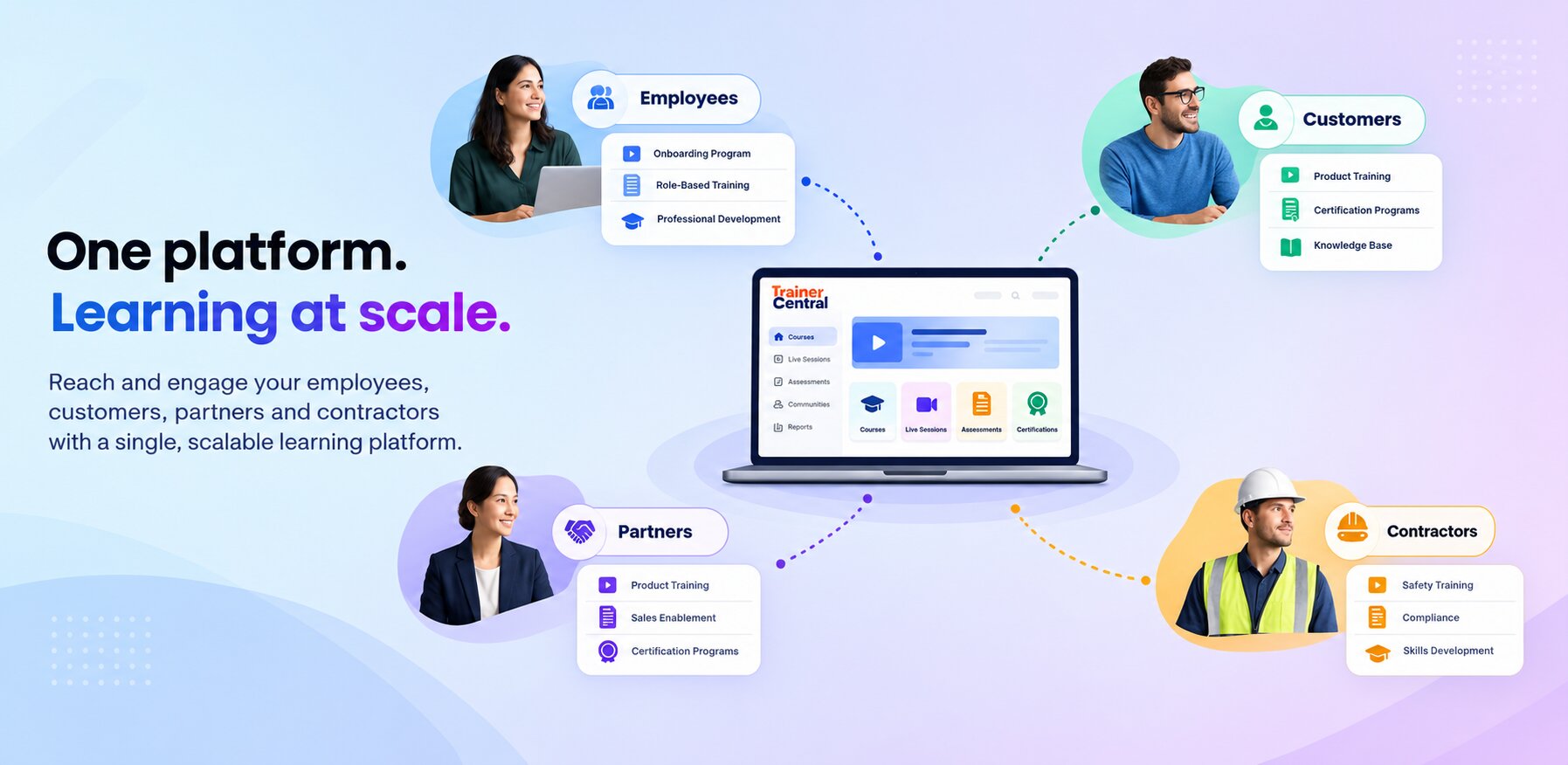
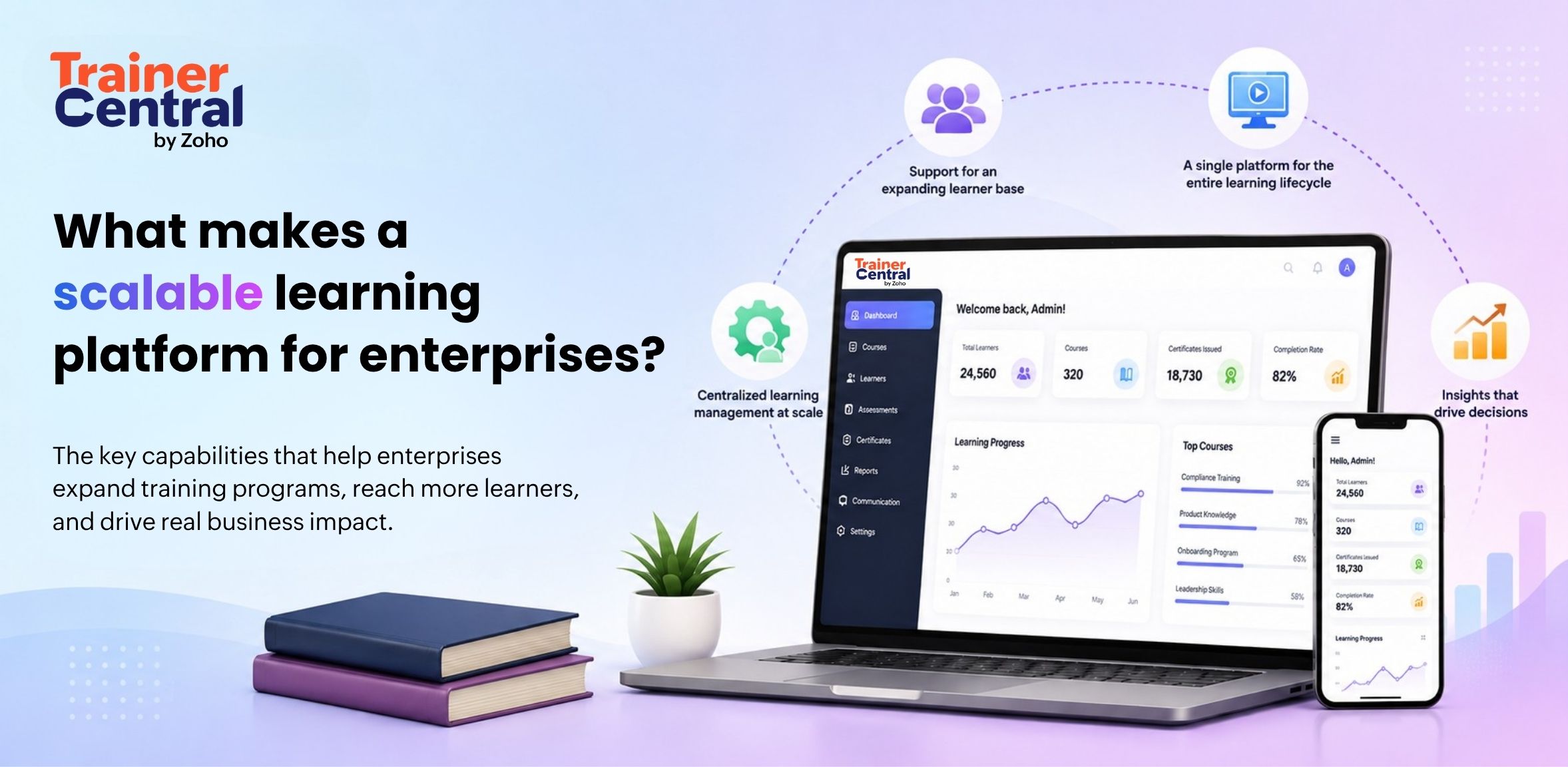
1. Support for an expanding learner base
While employee training and upskilling are the most immediate and obvious applications of enterprise learning, they represent just one aspect of it. Many organizations also run onboarding, training, and certification programs for customers, partners, contractors, and other external stakeholders—an approach known as extended enterprise learning.
As learner populations grow, L&D teams must not only support a higher volume of learners but also deliver increasingly specialized, role-specific learning experiences to diverse audiences.
A scalable learning platform should be able to accommodate these growing demands without creating additional administrative complexity or disrupting existing training initiatives. Whether organizations are onboarding new hires, upskilling employees, or delivering certification programs to external audiences, the platform should provide a consistent learning experience at scale.
Most importantly, organizations should be able to expand their training programs without significantly increasing administrative overhead or worrying that their learning platform will become a limiting factor as requirements evolve.
2. A single platform for the entire learning lifecycle
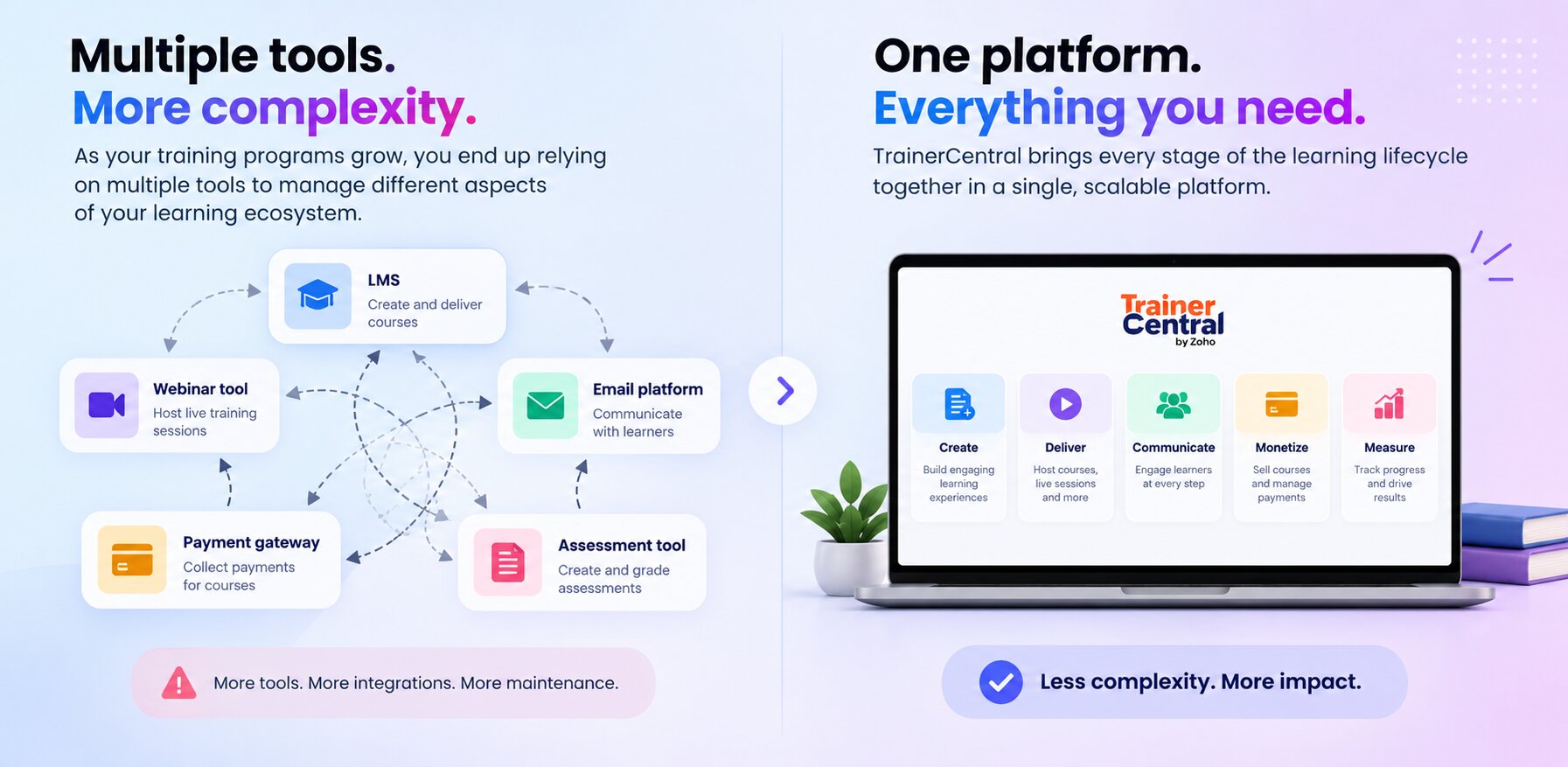
Not every learning platform supports every stage of the learning lifecycle. While most LMS are capable of handling core functions like course creation, delivery, assessments, and certifications, organizations often find themselves relying on additional tools to support other training-related activities. This may include an email marketing platform for learner communication, a webinar solution for instructor-led training, or a payment gateway for customer and partner certification programs.
Working with multiple tools is manageable when learner numbers are relatively small. However, as training programs grow in scale and complexity, organizations are forced to scale every component in their learning ecosystem. This means managing more integrations and more workflows that allow data to flow smoothly between multiple systems.
Over time, this creates unnecessary operational complexity that makes it harder to expand training programs efficiently. According to the publishing platform eLearning Industry, 52% of organizations already cite integration challenges as their biggest source of LMS dissatisfaction—a figure that only grows as training ecosystems scale.
A scalable learning platform should support the entire learning lifecycle from a single system, allowing organizations to create, deliver, manage, monetize, and measure learning experiences without relying on an ever-growing collection of third-party tools. All-in-one platforms like TrainerCentral allow organizations to manage every step in the learning life cycle, from course creation and learner communication to live sessions, payment management, and certification.
3. Centralized learning management at scale
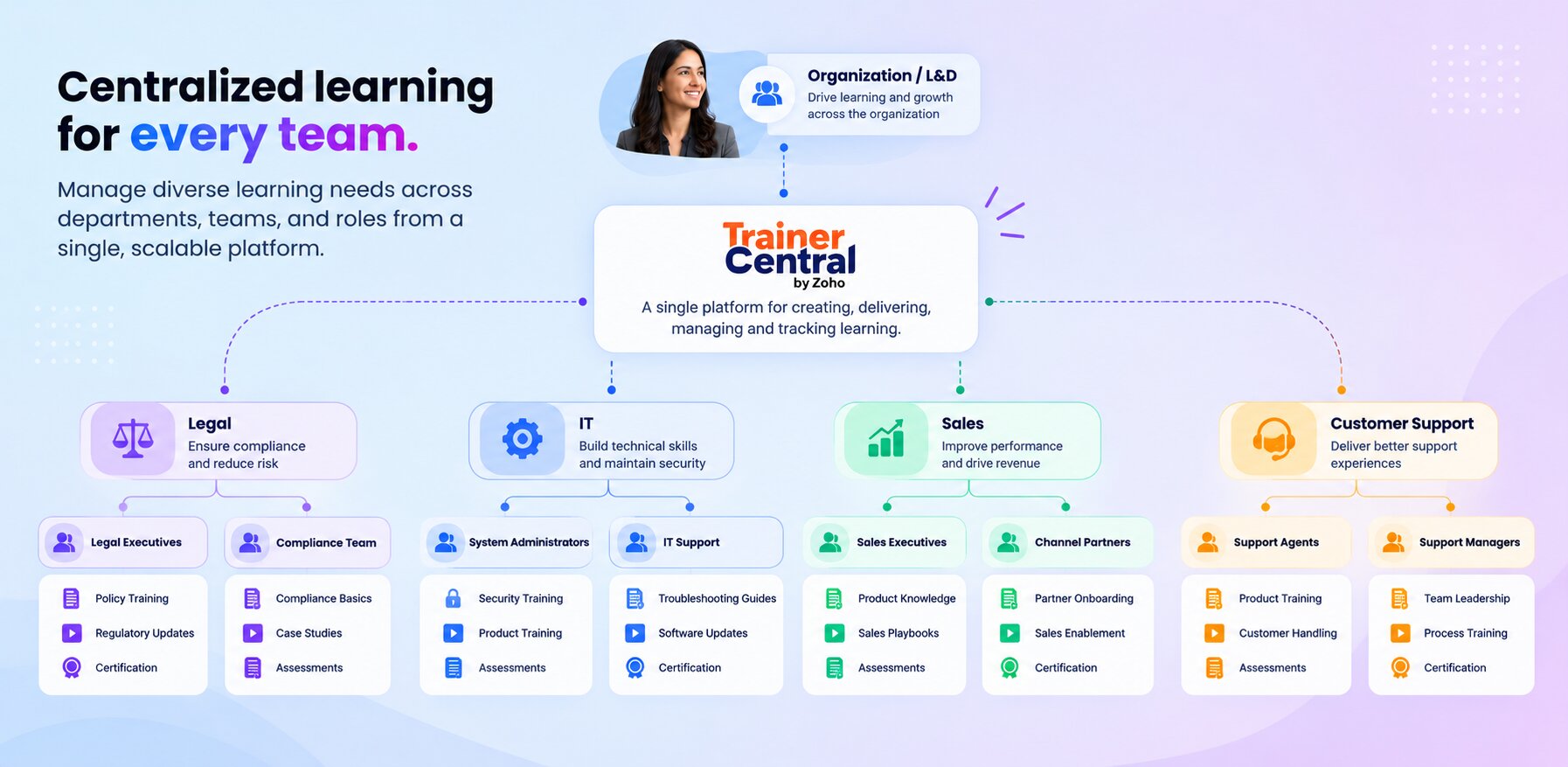
Growing organizations often experience a significant increase in the scope and complexity of their training requirements. As new teams, departments, and business functions emerge, so do their unique learning needs. For example, a legal executive’s responsibilities differ vastly from those of a system administrator. Naturally, the training requirements for these roles will be vastly different as well.
However, this doesn’t mean the legal team and the sysadmin team should set up two separate training platforms. Doing so can create unnecessary challenges around tech stack complexity, progress tracking, performance monitoring, and overall visibility into learning outcomes. It can also lead to the creation of data silos, making it that much harder for L&D teams to maintain a clear picture of training performance across the organization.
When it comes to scaling up training programs, having to manage multiple disconnected platforms is an uphill battle. A scalable learning platform enables centralized management while still accounting for the unique training requirements of different teams, roles, and departments. L&D teams can create team-specific portals and role-based learning paths while maintaining oversight from a single administrative interface.
This makes it easier to onboard new teams, roll out new training initiatives, and create learning experiences tailored to specific audiences. At the same time, organizations can maintain consistent learning standards and enforce company-wide training and compliance policies from a central location.
4. Cloud-based infrastructure
While a self-hosted LMS does offer greater control, scaling a platform when you’re maintaining the underlying hardware in-house can be a significant investment. As training programs grow, organizations must also account for the infrastructure required to support increasing learner numbers, larger content libraries, and greater platform usage.
When you’re responsible for every aspect of the platform, any substantial increase in training capacity is accompanied by additional infrastructure costs. Beyond the hardware itself, organizations must also invest time and resources into maintaining, upgrading, and monitoring the systems that keep the platform running.
While self-hosted LMSs may be the right choice for organizations with highly specialized requirements, dedicated IT resources, or strict compliance needs, they aren’t always the most practical option for businesses focused on scaling their training programs quickly and efficiently.
For many organizations, cloud-based LMSs offer a more flexible, cost-effective, and scalable alternative.
As training requirements evolve, organizations can simply upgrade their subscription tier while the vendor handles the underlying infrastructure.
5. Automated administrative tasks
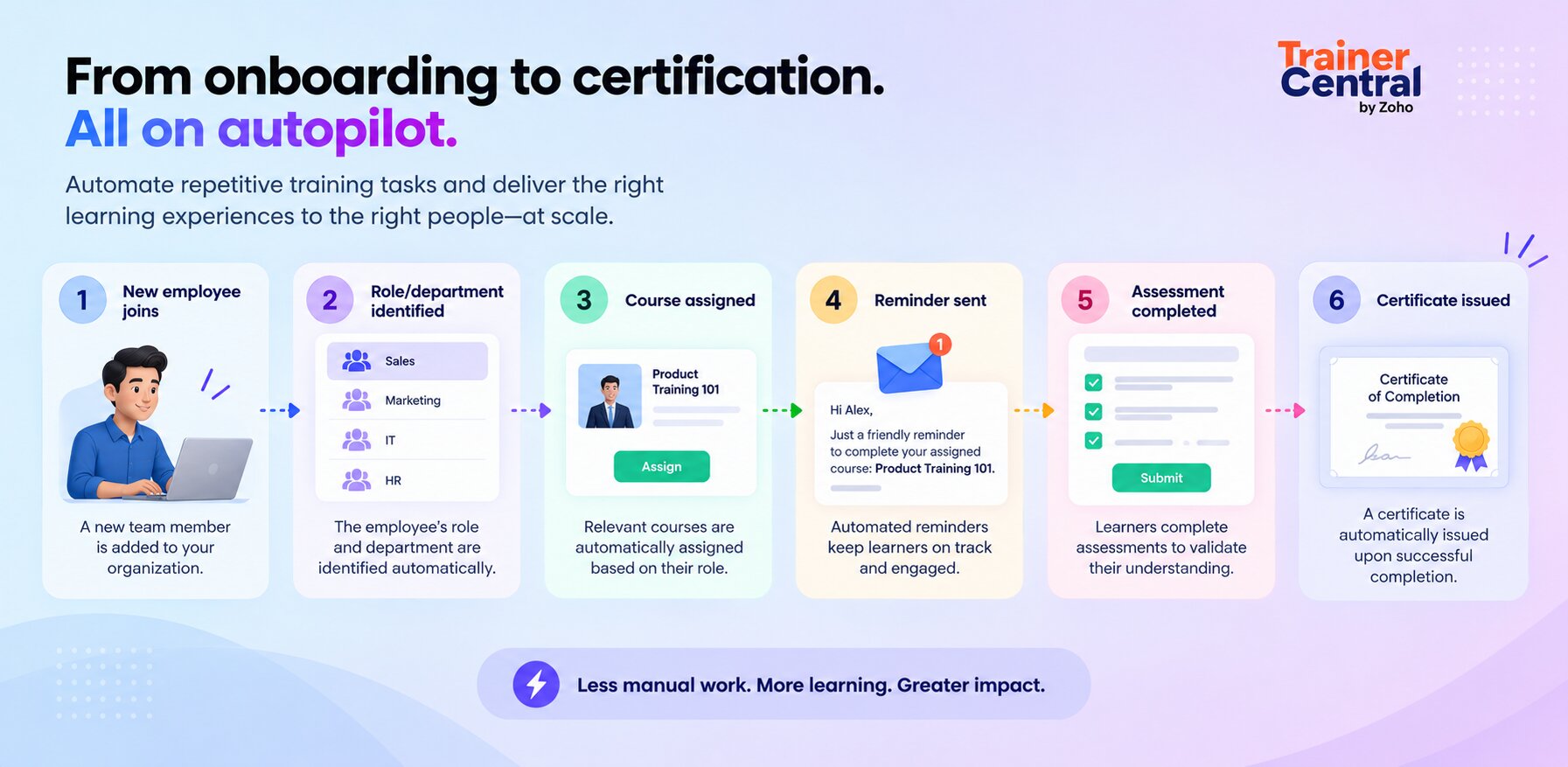
For a smaller organization with around 50 employees, a modest customer base, and few or no channel partners, managing learning tasks manually is still feasible. While it may not be the most efficient approach, L&D teams can manually enroll learners, share course materials, issue certifications, and administer assessments without creating a significant administrative burden.
As the organization grows, however, so does the workload associated with training employees, customers, and partners. An enterprise with thousands of employees, a large customer base, and an extensive partner network can no longer rely on manual processes to manage learning at scale. What was once manageable quickly becomes time-consuming, error-prone, and difficult to sustain.
A scalable learning platform automates routine administrative tasks such as enrolling learners into training programs based on their department, role, location, or other predefined criteria, sending notifications and reminders, issuing certifications, and triggering follow-up learning activities with minimal manual intervention.
By automating these repetitive processes, organizations can significantly reduce administrative overhead and free L&D teams to focus on designing engaging learning experiences, improving training quality, and supporting broader business objectives.
6. AI-assisted course creation
Between coordinating with experts within and outside the organization, recording training material, compiling information, and publishing content on the platform, a typical L&D team spends a considerable amount of time creating training programs for the organization.
Modern workforces also increasingly expect engaging, interactive learning experiences that combine videos, assessments, simulations, and collaborative activities with traditional learning materials. A 2024 TechSmith survey found that 83% of employees prefer video-based content over audio or text when consuming instructional material.
As organizations grow, keeping up with these content creation demands can place significant strain on L&D teams. AI-assisted course creation helps accelerate many of the most time-consuming aspects of course development, allowing organizations to build, update, and scale training programs more efficiently without compromising on quality.
Growth without friction
True scalability is achieved when organizations can expand the scope of their training systems without making them harder to manage. The right learning platform gives organizations the flexibility to supporting larger learner bases, manage increasingly complex training requirements, and deliver engaging learning experiences all without adding unnecessary complexity.
As a cloud-based learning platform, TrainerCentral enables organizations to create, deliver, and manage training from a single system while supporting unlimited courses and learners. Whether you’re a growing business with 50 employees or a global enterprise training thousands of employees, customers, and partners, TrainerCentral provides the flexibility to scale your learning initiatives as your organization evolves.
 Eric Roshaan
A passionate writer with a keen eye for detail, Eric has over four years of experience in marketing. As a product marketer for TrainerCentral by Zoho, he creates content that explores the latest trends in online learning. His interests also span AI, cybersecurity, and IT management, and his articles have been featured by leading publications across the Middle East and Asia Pacific regions.