- HOME
- Building a business
- How to scale your online training institute globally without operational chaos
How to scale your online training institute globally without operational chaos
- Last Updated : May 28, 2026
- 81 Views
- 5 Min Read

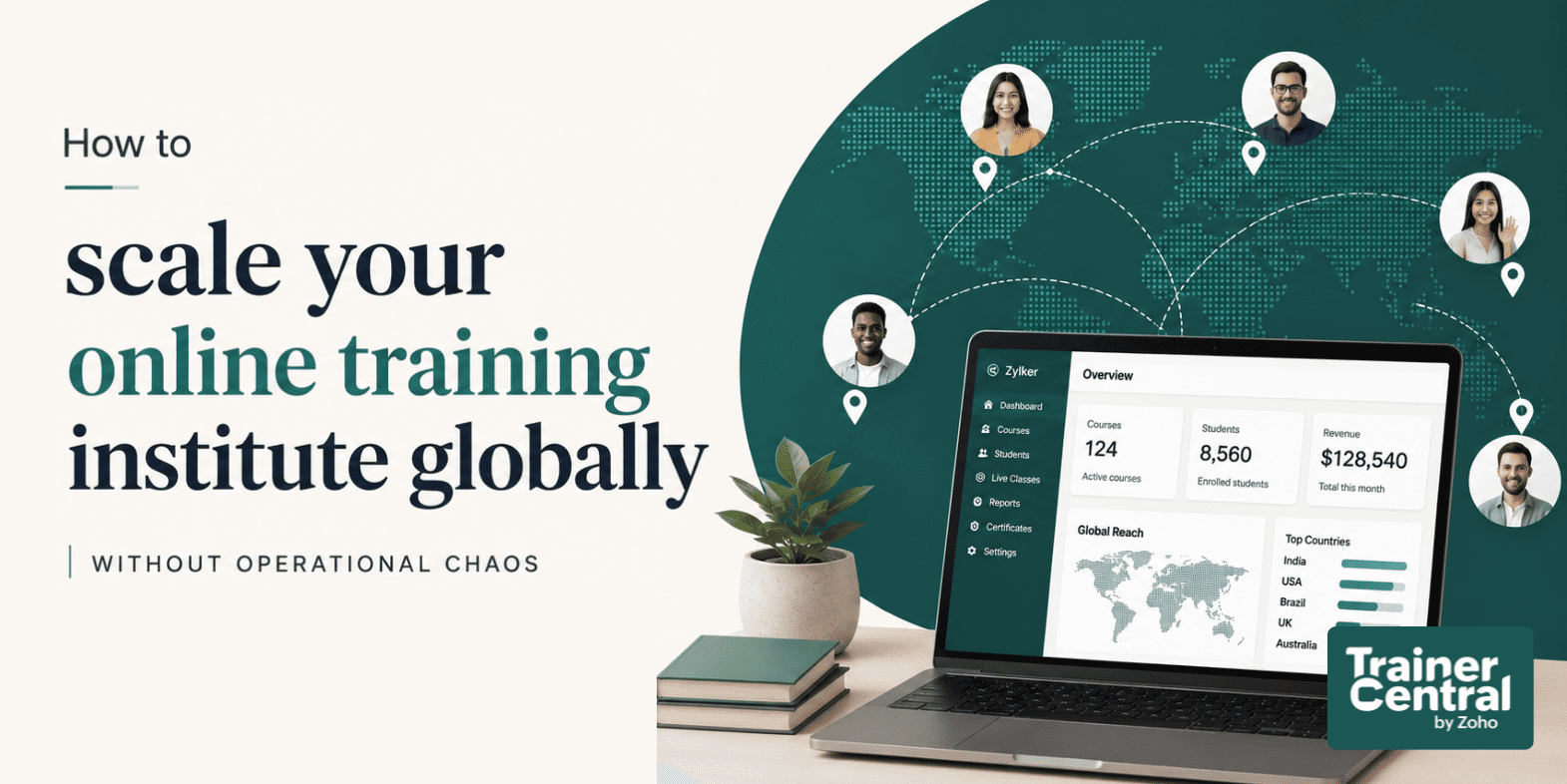
Scaling an online training institute globally creates operational challenges that many growing training businesses aren't prepared for.
What starts as a manageable setup with a few programs and simple workflows quickly becomes harder to coordinate as learner volumes increase and operations expand across regions. Pricing models have become more complex. Payment workflows vary across markets. Enrollment coordination becomes time-consuming. Administrative teams often end up juggling multiple systems just to keep training delivery running smoothly.
The core issue is fragmented operations.
Many online training institutes still rely on disconnected tools for live sessions, payments, learner communication, ticketing, and reporting. Over time, these disconnected workflows create operational inefficiencies that slow growth and affect learner experience.
As a result, more training businesses are shifting toward simpler and more centralized operational systems that help streamline pricing, payments, enrollments, and learner management without increasing administrative complexity.
Why global expansion creates operational challenges for training institutes
Most online training institutes begin with relatively simple operations. A few programs, one payment workflow, and a manageable learner base are easy to coordinate manually. Teams can handle enrollments through spreadsheets, send onboarding emails manually, and manage payments without major issues.
But expansion changes everything.
Once institutes begin offering live cohorts, certifications, workshops, and self-paced programs together, operational coordination becomes much harder. A training business serving learners across India, the U.S., and Europe may suddenly need to support multiple currencies, different pricing expectations, varied payment methods, and region-specific enrollment timelines.
What once felt manageable quickly turns into constant administrative coordination.
This is where many growing institutes begin experiencing operational strain for the first time.
Why fragmented training operations slow down growth
Many institutes try to solve operational problems by adding more tools.
One platform handles webinars. Another manages learner records. Payments happen through separate gateways. Communication is managed through external email tools. Reporting often lives inside spreadsheets.
Initially, this setup feels flexible because teams can adopt tools whenever new needs arise.
Over time, however, fragmentation creates operational inefficiency.
A learner completes payment, but access is delayed because records weren't updated manually. Another learner receives duplicate onboarding emails because communication systems are disconnected. Administrative teams spend hours reconciling enrollment data across platforms every week.
The result isn't just inefficiency, but slower scalability.
How global pricing models become difficult to manage
Pricing operations become significantly more complex during international expansion.
A pricing structure that works in one market may not work in another. Some learners may prefer installment-based payments, while enterprise buyers may require invoice-based purchasing. Certification programs, workshops, subscriptions, and live cohorts often require entirely different pricing approaches.
For example, a training institute running certification cohorts across Southeast Asia and North America may need separate pricing models, region-specific payment options, and different enrollment windows for each audience segment.
On a smaller scale, teams usually manage these situations manually.
But as learner volume increases, manual coordination becomes difficult to sustain. Administrative teams end up constantly updating spreadsheets, validating payments, adjusting enrollment access, and handling exceptions individually.
This is why many growing training institutes are rethinking pricing operations entirely. Instead of treating pricing as a static setup, they're building more structured systems around enrollments, payments, and learner access.
Why enrollment workflows matter more than ever
Most learners never think about operational systems directly.
But they immediately notice when operations feel disorganized.
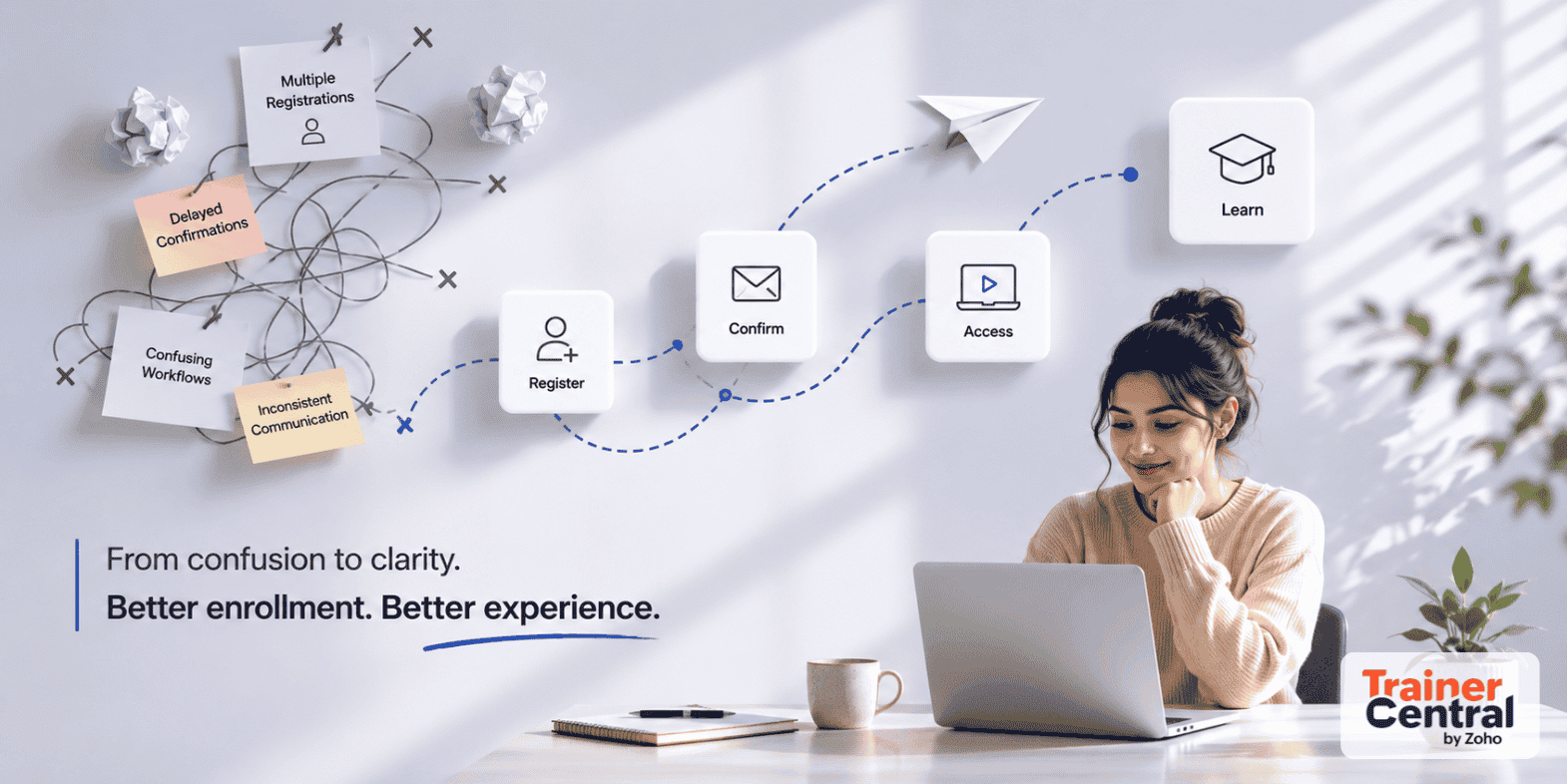
Delayed confirmations, unclear onboarding instructions, inconsistent communication, or confusing registration workflows create friction before learning even begins.
This becomes especially common when institutes offer multiple learning formats simultaneously. A learner may attend a live workshop, purchase a certification program later, and eventually join a blended learning cohort. If enrollment systems are disconnected, the learner experience quickly becomes inconsistent.
Some learners may need to register multiple times. Others may receive duplicate communication or experience delays in accessing sessions and learning materials.
These operational gaps affect learner trust far more than many institutes realize.
That's why modern training businesses are increasingly treating enrollment workflows as part of the learner experience itself rather than as a purely administrative process.
How payment workflows affect learner experience
Payment workflows now play a major role in learner trust and conversion.
According to research by Baymard Institute, checkout friction remains one of the biggest causes of abandonment across online businesses. Training institutes face similar challenges, especially when payment systems operate separately from learner management processes.
Many administrative teams still manually verify payments, update learner records, and coordinate onboarding after transactions are completed.
This manual workflow may work with 20 learners. It becomes extremely difficult with 2,000.
Modern training businesses are increasingly treating payments, enrollments, onboarding, and learner access as connected operational workflows rather than isolated tasks handled by separate systems. This shift isn't just about improving operational efficiency. It's also about building learner trust through a smoother and more reliable enrollment experience.
Why training institutes are automating operational workflows
Automation inside training businesses is evolving. A few years ago, most automation efforts focused heavily on marketing activities such as promotional emails and lead nurturing workflows. Today, institutes are increasingly automating operational coordination instead.
This includes learner onboarding, payment confirmations, session reminders, certification workflows, and administrative follow-ups.
The goal isn't to remove human interaction from training operations. The goal is to reduce repetitive coordination work that consumes administrative capacity and slows scalability.
The most effective operational systems are usually the simplest ones. They reduce manual dependency without making workflows more complicated for teams or learners.
That shift toward operational simplicity is becoming increasingly important for growing institutes.
How operational consistency builds learner trust
Course quality alone is no longer enough to differentiate a training institute.
Learners now evaluate the complete operational experience. They notice how easy enrollment feels, how quickly communication happens, how smoothly payments are processed, and how organized onboarding feels.
When operations become fragmented, learners notice immediately.
Delayed confirmations, inconsistent updates, and confusing workflows reduce confidence in the training brand itself. Even strong educational content cannot fully compensate for operational inconsistency.
This is why operational maturity is becoming a competitive advantage for modern training institutes.
Institutes that operate smoothly often build stronger learner trust because the overall experience feels more reliable from beginning to end.
Why centralized, simpler operating systems scale better
Many training institutes assume growth requires adding more operational tools.
In reality, sustainable scalability often comes from reducing fragmentation instead.
The online training industry is gradually shifting toward more centralized operational systems that simplify pricing coordination, learner management, payment workflows, enrollments, and communication.
The institutes scaling successfully today are often the ones simplifying operations early—before complexity becomes unmanageable.
Because long-term growth in online training depends on more than great programs and learner acquisition.
It depends on operational clarity.
Final thoughts
The online training industry is going through a major operational shift. Training institutes are realizing that growth isn't just about launching more programs or expanding into more regions. It's about building operational systems that remain manageable as complexity increases.
The future of training operations is moving away from fragmented workflows and disconnected tools toward simpler, more structured systems that support scalability without operational chaos.
Because sustainable growth in online training increasingly depends on operational maturity—not just audience size.