- HOME
- Building a business
- How to launch your first online course (and learn from it)
How to launch your first online course (and learn from it)
- Last Updated : July 9, 2026
- 89 Views
- 9 Min Read

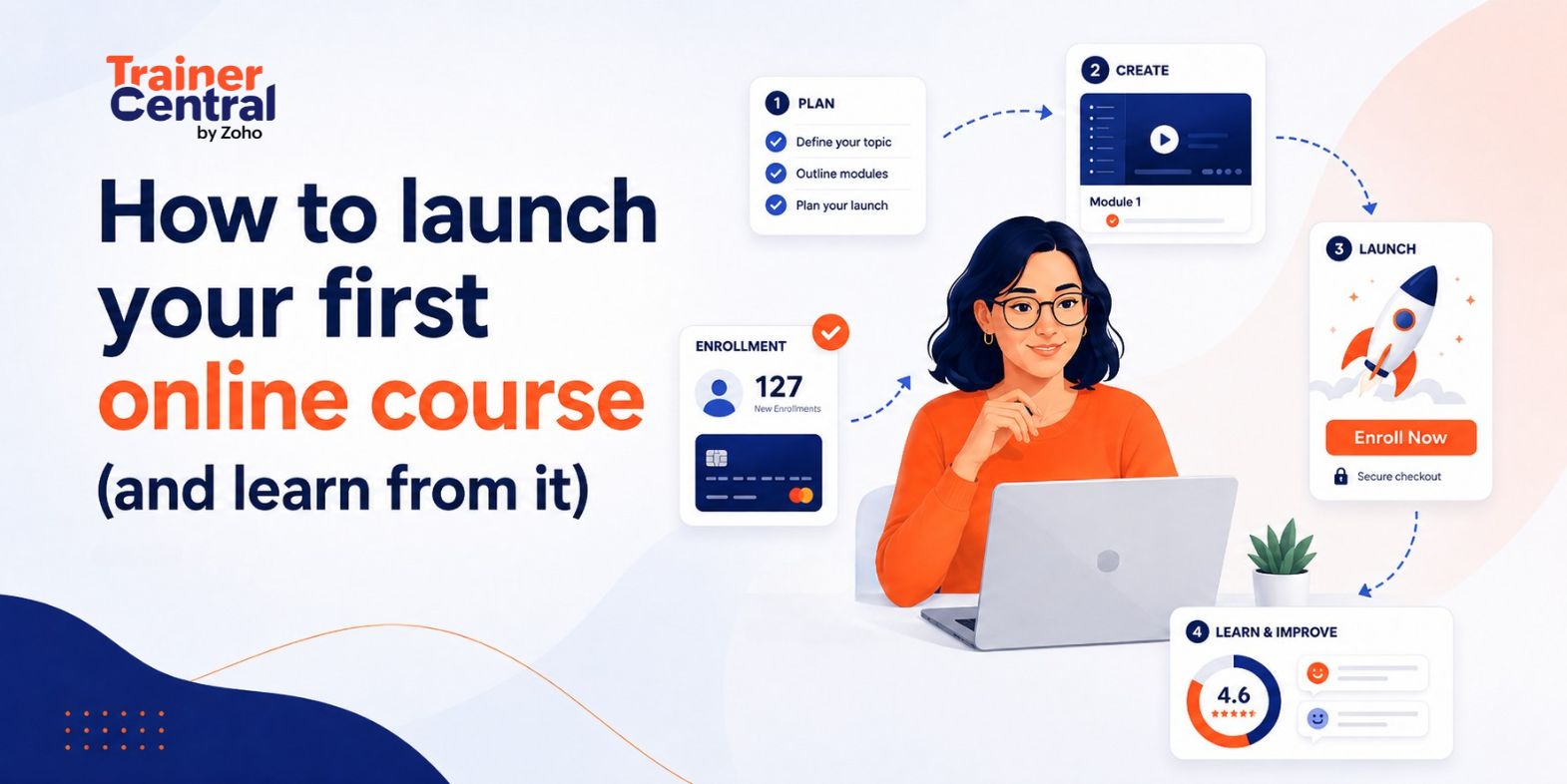
You’ve planned your course.
The lessons may be outlined, the first resources may be ready, or the idea may still be sitting in your notes.
But now comes the part that feels harder to prepare for: launching it.
A first course launch is where you find out whether people understand your offer, trust the outcome, and are willing to enroll. It’s also where questions start to feel more real: How much should you charge? Where will the first learners come from? What should you say before launch day? What if only a few people buy?
Your first launch doesn’t need to be big or perfect. It needs to help you test the offer, support the learners who join, and use real feedback to make the next version stronger.
In this guide, we’ll walk through how to plan your first online course launch with more clarity, less guesswork, and a better way to learn from whatever happens next.
How do you launch your first online course?
To launch your first online course, validate your offer, create a simple first version, set a practical price, build demand before launch, prepare a clear landing page, test the buying and learner experience, open enrollment, support your first learners, and use feedback to improve the next version.
A successful first launch isn’t just about sales. It’s also about learning whether your course promise is clear, whether your audience understands the value, whether your pricing feels right, and whether learners can move through the course without confusion.
Validate the offer before building everything
Before creating the full course, confirm that people actually want it. Many first-time creators spend weeks building lessons before checking whether their audience has a real need for the topic.
Start by asking three questions:
Who is this course for?
What specific problem does it solve?
Is that problem important enough for learners to spend time or money on?
You can validate your idea by talking to potential learners, running a short survey, reviewing questions in online communities, studying existing courses, offering a free workshop, or creating a waitlist.
The goal isn’t to find a topic with no competition. Competition often means there’s demand. Your goal is to find a clear problem you can solve for a specific type of learner.
Create a simple first version
Your first course doesn’t need to include everything you know. In fact, trying to include too much can delay your launch and overwhelm learners.
Start with the smallest useful version of the course. Ask: What does a learner need to understand, practice, or complete to achieve the promised outcome?
A simple structure could look like this:
Foundations: Introduce the topic and key concepts.
Core skills: Teach the essential methods or steps.
Application: Help learners apply what they learned.
Practice: Give them a chance to improve or review mistakes.
Action plan: Help them complete the final task or next step.
This is only one possible structure. Some courses work better as a project, challenge, workshop series, or set of short lessons around one specific skill. The best structure is the one that helps learners reach the outcome with the least amount of confusion.
Choose a format you can actually deliver
Some courses work well as self-paced lessons. Others need live sessions, feedback, assignments, or group learning.
For a first launch, keep the format manageable. You may start with recorded lessons and one live Q&A session, or run a live workshop first and turn it into a self-paced course later.
Choose the format based on two things: what learners need to succeed and what you can deliver consistently. Don’t choose a complex format just because it looks more premium.
Set a practical first-course price
Pricing your first course is difficult because you don’t have much sales data yet. Instead of trying to find the perfect price, choose a starting price that matches the depth of the course, the value of the outcome, and the level of support included.
As a rough starting point:
Free resource or lead magnet: Useful for testing demand or growing an email list.
Low-cost workshop or mini-course: Around $19–$99 for one focused problem.
Beginner self-paced course: Around $99–$299 for structured lessons and resources.
Live or cohort-based course: Around $299–$999 when learners get live sessions, feedback, or directsupport.
Specialized professional course: $999+ only when the course solves a high-value problem and you have strong credibility, proof, or demand.
These aren’t fixed rules. Pricing should change based on your audience, niche, region, course depth, level of support, and the value of the outcome.
For your first launch, keep pricing simple. You can start with one price, offer an early-bird rate, or run a beta version at a lower price in exchange for feedback and testimonials.
Don’t price only by the number of videos or hours inside the course. Learners are paying for the outcome, support, clarity, and confidence your course helps them achieve.
Build demand before you launch
Many creators think launching means announcing the course once it’s ready. In reality, promotion should begin before the course is finished.
You don’t need a huge audience, but you do need a way to reach the right people. This can be an email list, LinkedIn posts, YouTube videos, Instagram content, niche communities, webinars, referrals, partnerships, or direct conversations.
Before launch, talk about the problem your course solves. Share small lessons, examples, mistakes, checklists, behind-the-scenes updates, and questions from your audience. The goal is to make people aware of the problem before you ask them to pay for the solution.
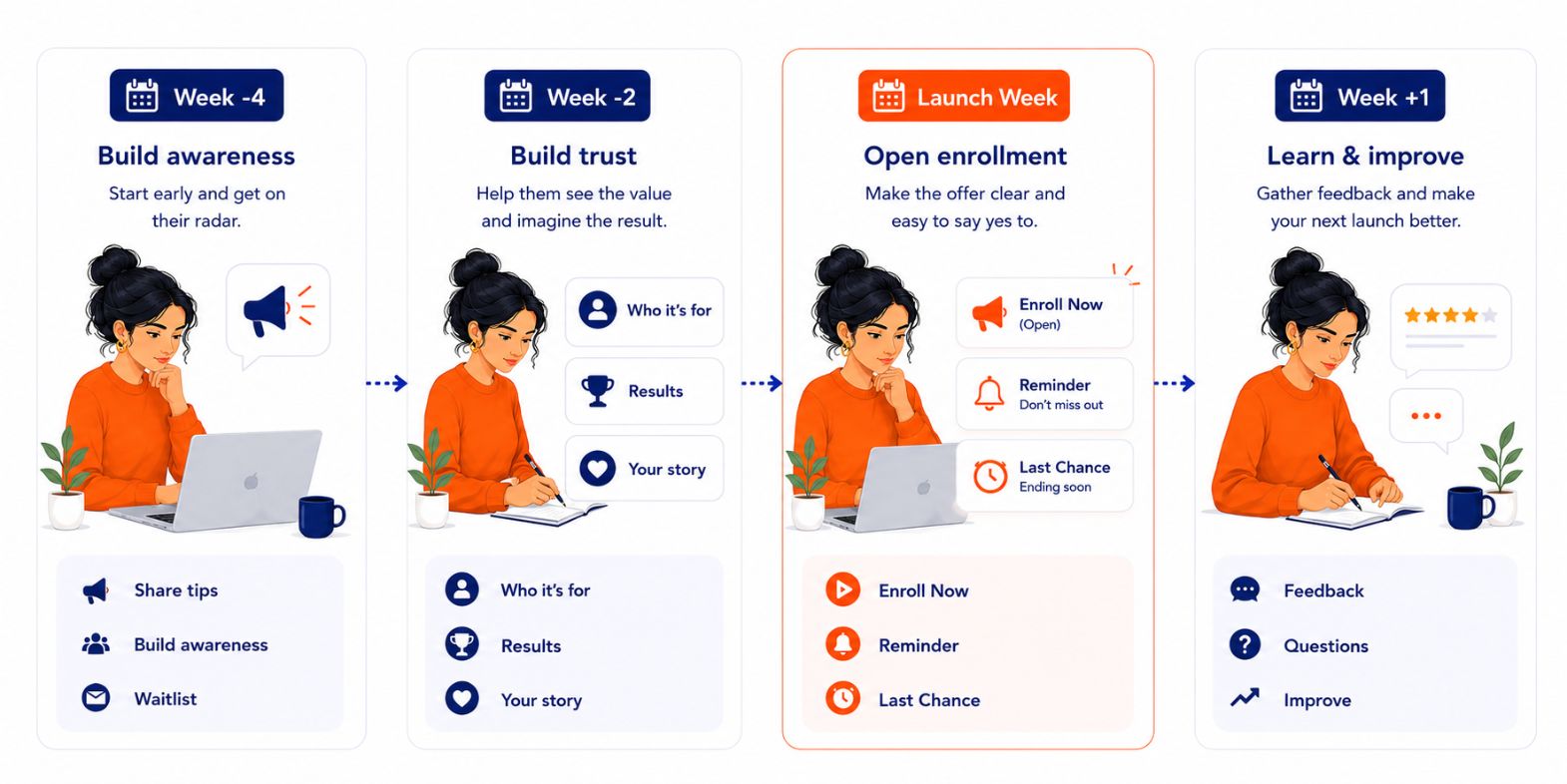
Here’s a simple launch plan:
Four weeks before launch: Start sharing content about the problem and invite people to a waitlist or free session.
Two weeks before launch: Explain who the course is for, what result it helps learners achieve, and why you’ve created it.
Launch week: Open enrollment with a clear message. Repeat the offer more than once because most people won’t see or act on the first announcement.
After launch: Follow up with interested people who didn’t buy and ask what held them back.
Distribution is often harder than course creation. A useful course still needs repeated, clear communication before people feel ready to enroll.
Create a landing page and launch messages
Your landing page doesn’t need to be complicated. It needs to explain the offer clearly.
A simple landing page should answer:
- Who is this course for?
- What problem does it solve?
- What will learners be able to do after completing it?
- What is included?
- Why should learners trust you?
- How do they enroll?
For launch week, prepare a few core messages in advance:
- A launch announcement.
- A “who this is for” message.
- A course outcome post or email.
- A curriculum overview.
- A pricing or deadline reminder.
- A common questions post or email.
A simple launch message can follow this structure. Name the problem, explain who the course is for, state the outcome, share what’s included, mention the price or deadline, link to the landing page, and invite questions.
Test the buying and learner experience
Before opening enrollment, go through your course exactly as a learner would. This step is easy to rush, but it can prevent some of the most frustrating launch-day problems.
Start with the purchase journey. Click every button on your landing page, complete a test enrollment, check the payment flow, and confirm that the learner receives the right confirmation or welcome email. A learner who’s ready to buy may not come back if checkout fails or feels confusing.
Then test the course access experience. Make sure learners can log in, find the course, move through the lessons, open downloads, submit assignments or quizzes if included, and join live sessions without extra explanation.
Also test the experience on desktop and mobile. Finally, ask one or two people to go through the process with minimal instructions. If they get stuck, your learners may face the same issue on launch day.
Launch, learn, and improve
Your first launch gives you real feedback. It shows what learners understood, where they hesitated, what questions they asked, and what they needed once they joined.
After launch, review:
Enrollment numbers.
Landing page clicks and signups.
Payment drop-offs.
Learner questions.
Course completion.
Live session attendance.
Feedback forms.
Refund or cancellation reasons, if any.
Use this information to improve the next version. You might clarify your course promise, adjust the price, improve the landing page, add a live session, simplify the lessons, or start promotion earlier next time.
What if your first launch gets low sales?
Low initial sales don’t always mean your course idea is bad. It may mean your audience was too small, the offer was unclear, the price felt risky, or people didn’t hear about the course enough times before launch.
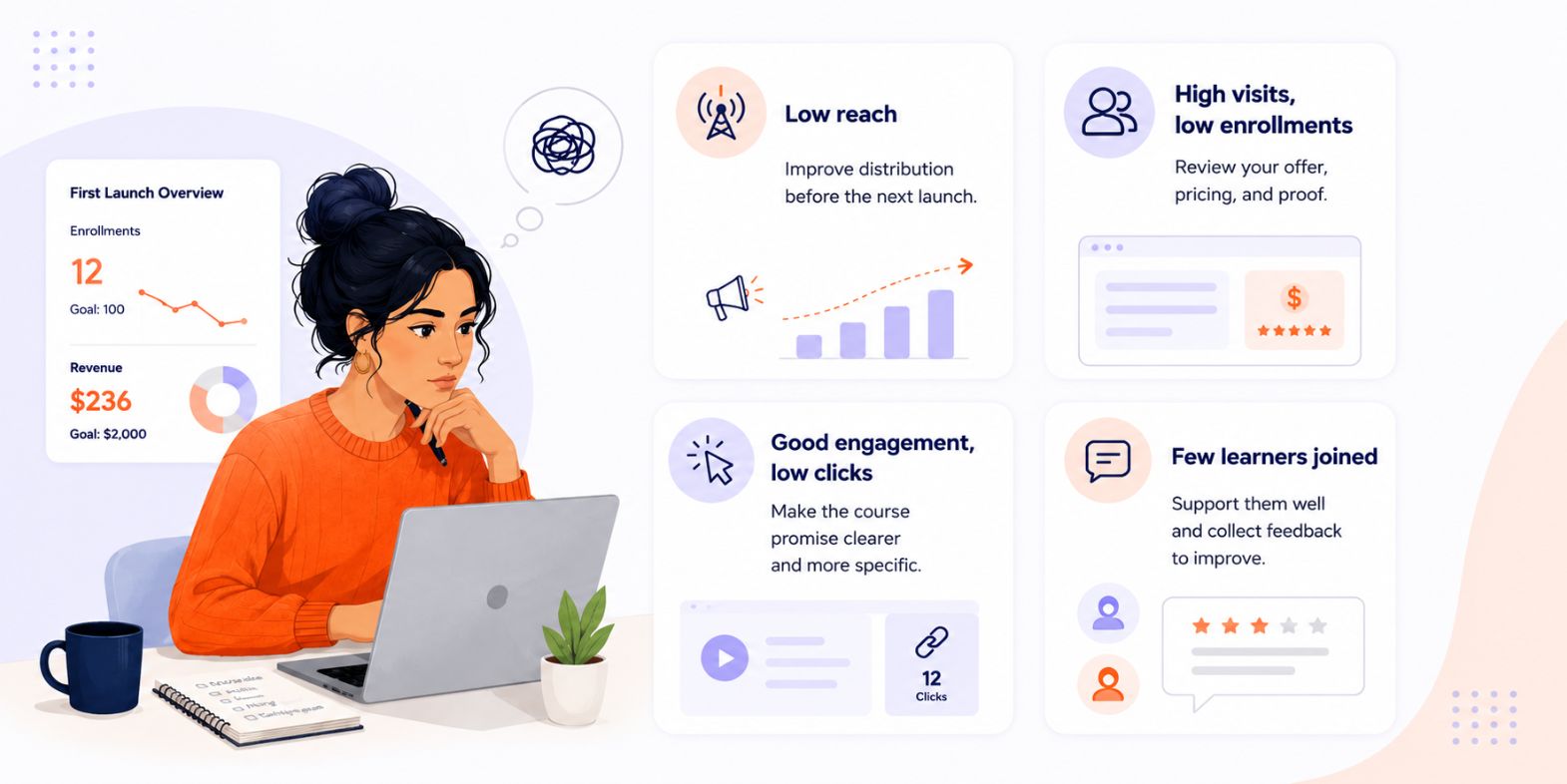
If many people visited the landing page but didn’t buy, the issue may be the offer, pricing, proof, or page copy. If people engaged with your content but didn’t click, the course promise may not feel urgent enough. If only a few people saw the launch, the problem is probably distribution.
Ask yourself:
Did enough people know about the course before launch?
Was the outcome specific and easy to understand?
Did the landing page clearly explain who the course is for?
Did the price match the audience and level of support?
Did people trust me enough to buy?
Did I follow up with interested people?
If your first launch is small, make it useful. Personally support the first learners, collect detailed feedback, improve the course, and ask for testimonials if they had a good experience. That cohort can become the proof you need for a stronger second launch.
Common mistakes to avoid
First-time creators often run into similar problems. Avoiding these mistakes can make your launch smoother.
Creating everything before validating demand: Test the problem before building the full course.
Choosing a topic that is too broad: “Learn marketing” is broad. “Create your first email campaign” is clearer.
Building too much before selling: Your first version should be useful, not exhaustive.
Pricing only by course length: Learners care about outcomes, not the number of videos.
Waiting until launch day to promote: Start building demand before enrollment opens.
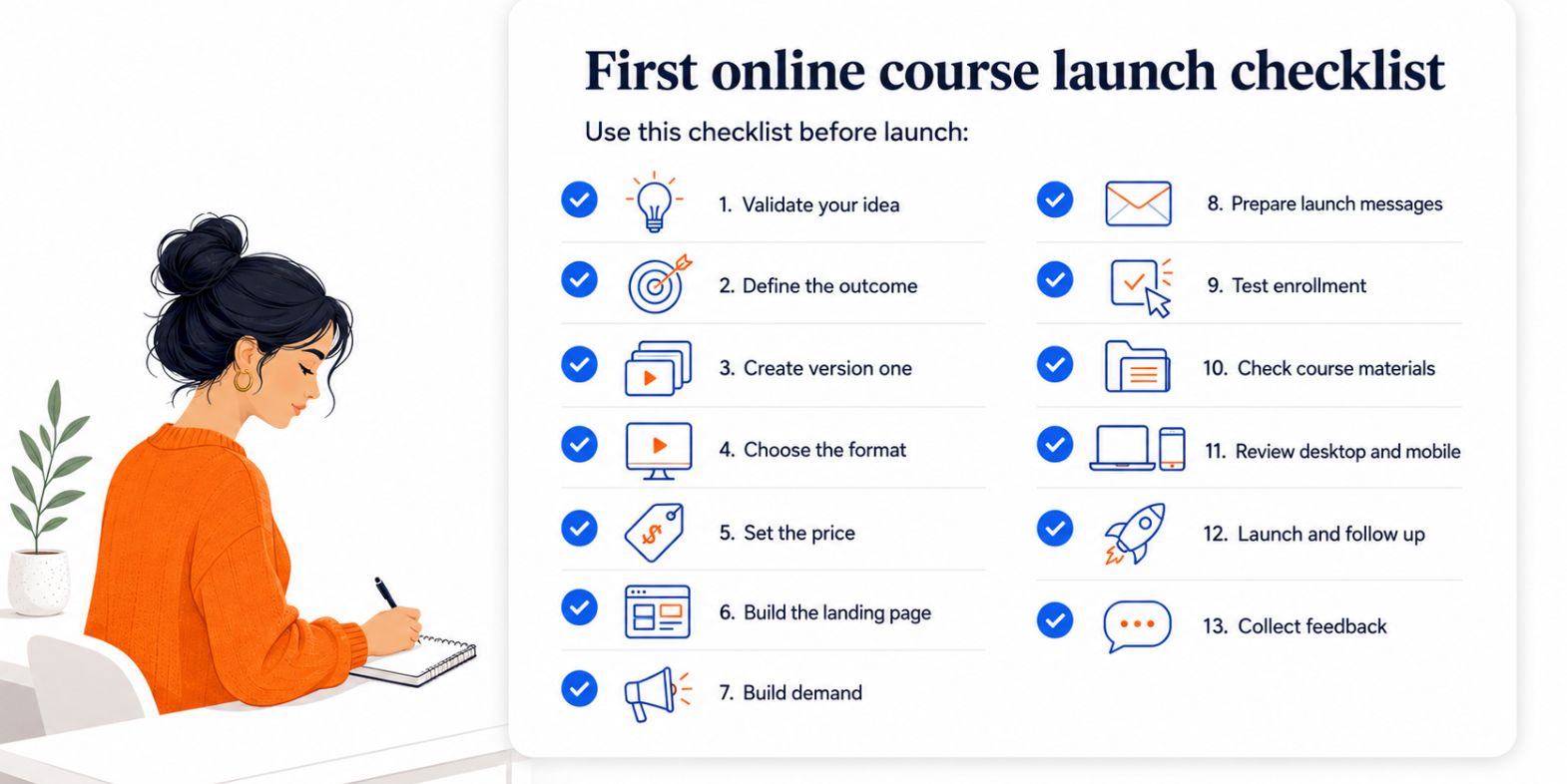
First online course launch checklist
Use this checklist before launch:
Validate your course idea and target your learners.
Define the learner outcome.
Create a simple first version.
Choose a format you can deliver.
Set your first-course price.
Build your landing page.
Start building demand before launch.
Prepare launch week messages.
Test enrollment, payment, and course access.
Check videos, downloads, reminders, and live session links.
Review the experience on desktop and mobile.
Launch and follow up with interested people.
Collect feedback and improve the next version.
Final thoughts
Your first online course launch isn’t just a sales event. It’s your first real test of the course promise, audience demand, pricing, delivery experience, and launch message.
Even a small launch can give you useful signals. You’ll learn which parts of the offer people understood, where they hesitated, what questions they asked, and what learners actually needed once they joined. That feedback is what makes your second launch stronger.
Instead of trying to get everything right the first time, focus on getting your first version in front of the right people, supporting the learners who enroll, and paying attention to what the launch teaches you.
FAQ
How is launching an online course different from creating one?
Creating an online course focuses on building the content and learning experience. Launching an online course focuses on getting the course in front of the right people, communicating the offer clearly, accepting enrollments, delivering the course smoothly, and learning from the first round of sales and feedback.
Do I need an audience before launching an online course?
You don’t need a large audience, but you do need a way to reach the right people. This could be an email list, social media audience, niche community, webinar audience, referral network, or direct conversations with potential learners.
How much should I charge for my first online course?
As a rough starting point, mini-courses may sit around $19–$99, beginner self-paced courses around $99–$299, and live-supported courses around $299–$999 or more. The right price depends on your audience, outcome, course depth, and level of support.
Should I launch a beta version of my course?
A beta version can be useful for first-time creators. You can offer the course to a smaller group at a lower price, provide more direct support, collect feedback, and use what you learn to improve the next version.
What platform should I use to launch my online course?
Choose a platform that lets a learner go from payment to course access without you manually sending links, confirming payments, or updating spreadsheets. For a first launch, that matters more than advanced features. If your course includes live sessions, assignments, assessments, or certificates, make sure those are easy to set up and test before enrollment opens.
What should I do if my first course launch gets low sales?
Low sales don’t always mean the course idea is bad. Review your audience size, course promise, landing page, pricing, trust signals, and follow up. Use the first launch to understand objections, improve the offer, and prepare a stronger second launch.
What should I do after launching my online course?
Support your first learners, collect feedback, review completion and engagement, identify objections, improve the course, and use what you learned to plan a stronger second launch.