- HOME
- E-Learning trends
- Employee onboarding: A practical guide to getting it right
Employee onboarding: A practical guide to getting it right
- Last Updated : March 18, 2026
- 162 Views
- 17 Min Read

The difference between a new hire who thrives and one who quietly exits before 90 days usually comes down to how they were onboarded. Not welcomed. Not oriented. Onboarded.
Walk into most companies today and what passes for onboarding is a welcome email, a stack of HR forms, and a tour nobody asked for. That's not onboarding. That's hoping for the best.
Real onboarding runs deeper. If done right, it helps people understand what they're walking into: the culture, the unspoken rules, and what actually gets rewarded here. It gives new hires a working sense of how their job connects to what the team is trying to do. And whether people stay, how quickly they contribute, how invested they become all traces back to whether those first few weeks were handled well.
Companies with structured onboarding programs keep people longer. Not because they dump more information on new hires, but because people feel like they belong somewhere worth committing to.
This guide covers the employee onboarding practices that actually move the needle: Building a framework that works, practical steps that get people contributing faster, and what to avoid. Building from scratch or overhauling what you have, there's something concrete here either way.
What is employee onboarding?
Employee onboarding is the process of bringing someone into an organization in a way that actually sticks. It's more than just assigning a desk and handing over login credentials. It's about helping new hires understand their role, find their footing in the culture, and become productive without the painful trial-by-fire period.
Most well-run onboarding programs start before someone's first official day. Many run through the first three months. That's not excessive; it's intentional.
The goal isn't paperwork completion. It's confidence. New hires should finish the onboarding period knowing what's expected of them, where to find answers when they're stuck, and why their work matters to the team.
Most structured programs move through several stages:
- Preboarding: Documents, system access, and welcome communication handled before day one.
- First-day onboarding: Introductions, company overview, initial setup.
- Early training: Role-specific training and access to learning resources.
- Integration: Building working relationships and understanding how things actually flow.
- Performance alignment: Defining goals and expectations for the first several months.
Organizations that treat onboarding as a genuine process rather than an administrative checkpoint find that people adapt faster and stick around longer.
Onboarding vs. orientation: What's the difference?
People use these terms interchangeably. But they're not the same thing, and confusing them usually means the more important one gets short-changed.
Aspect | Orientation | Onboarding |
Purpose | Introduce employees to the company | Help employees integrate into their role and team |
Duration | Usually a single day or session | A process that can last weeks or months |
Focus | Policies, paperwork, company overview | Training, culture, relationships, productivity |
Outcome | Basic familiarity with the organization | Long-term engagement and faster productivity |
Orientation is the first step. HR paperwork, a policy review, maybe a tour. It's necessary, but it's not where the real work happens.
Onboarding is everything that follows. The sustained effort to help someone actually become part of the organization. Building skills, navigating the culture, and gradually owning real work. Companies that invest in this intentionally end up with stronger teams and far less early-stage turnover, and the two outcomes are directly connected.
Why employee onboarding matters
A well-designed onboarding process does more than smooth out the first week. It shapes how someone performs months later, how long they stay, and how quickly they stop needing constant guidance.
It improves employee engagement
The first few weeks at a new job are surprisingly formative. People are still forming their impressions—sizing up whether the culture matches what they were told in interviews, whether their manager is someone they can trust, whether they made the right call accepting the offer.
A thoughtful onboarding experience nudges those questions toward yes. People who feel welcomed from the start behave differently. They ask questions instead of guessing. They put effort into team relationships rather than waiting to see how things shake out.
Get it right early, and you're not just filling a role. You're building someone who cares about the work.
It increases employee retention
Many employees form their opinion about whether to stay long before their first performance review. Some make up their minds within weeks of joining.
Poor onboarding, unclear expectations, no real training structure, inconsistent communication, can push people out the door before they've had a real shot at the job. Good onboarding gives people a reason to stay. Clear expectations signal that their success actually matters to the organization. That message, or the absence of it, shows up directly in retention numbers.
It accelerates time to productivity
Without a clear onboarding structure, new employees spend their first weeks in a kind of productive-looking limbo—busy, asking questions, but not really contributing, because nobody handed them the map.
Structured onboarding gives them the map. People learn their responsibilities faster, understand the tools they'll use daily, and get role-specific training early enough for it to be useful. A shorter time to productivity benefits the employee and the organization equally.
The employee onboarding process, step by step
An effective onboarding process doesn't kick off on day one. It starts the moment a candidate signs an offer letter. For most roles, it doesn't wind down until the first several months are behind them.
Preboarding
Preboarding covers everything that happens between offer acceptance and the official start date. It's also the most consistently neglected stage, which is a missed opportunity. First impressions start forming before the person has even arrived on their first day.
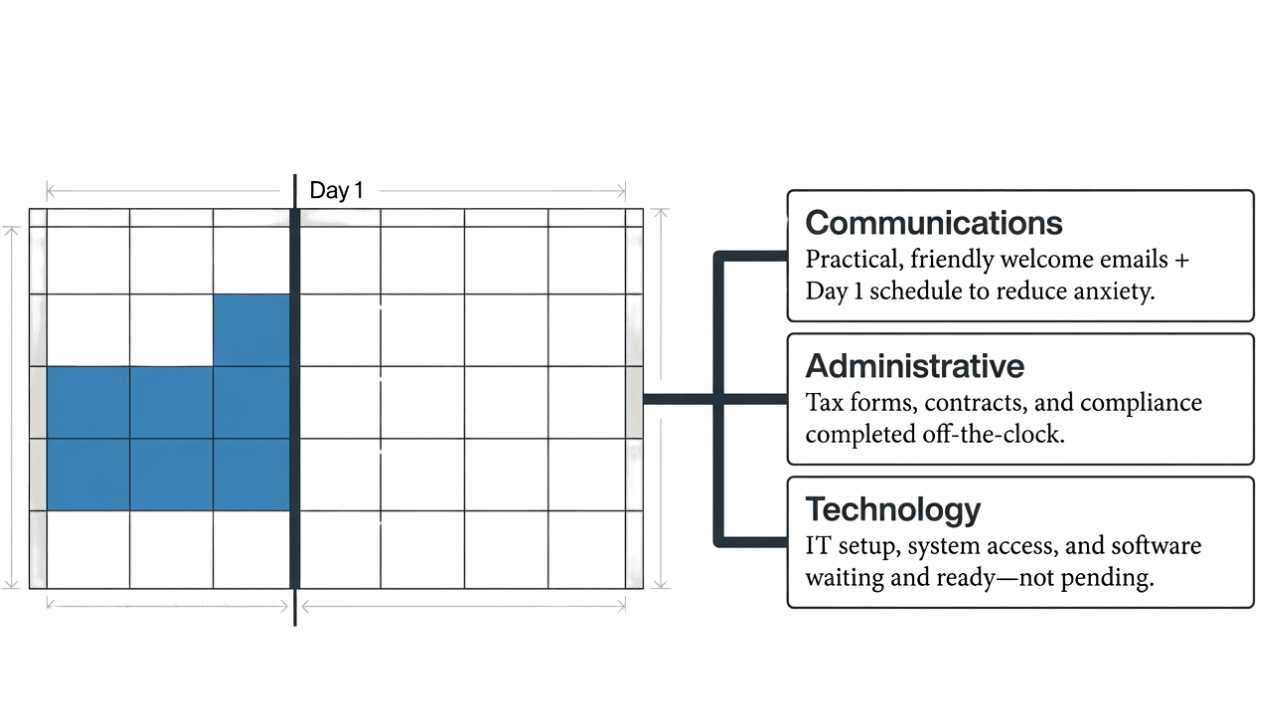
What good preboarding looks like:
- Welcome emails: Practical, friendly communication that sets expectations for day one, introduces the team, and gives the new hire something concrete to look forward to
- Document completion: Tax forms, contracts, compliance paperwork should all be done before day one so the first day can actually focus on the job
- IT setup: Email accounts, system access, communication tools, required software should be ready and waiting, not pending, when someone walks in for the first time.
A strong preboarding experience sends an early signal: This organization is organized, and your time is valued.
First day onboarding
The first day carries more weight than it probably should. Not because it needs to be flawless, but because first impressions tend to stick.
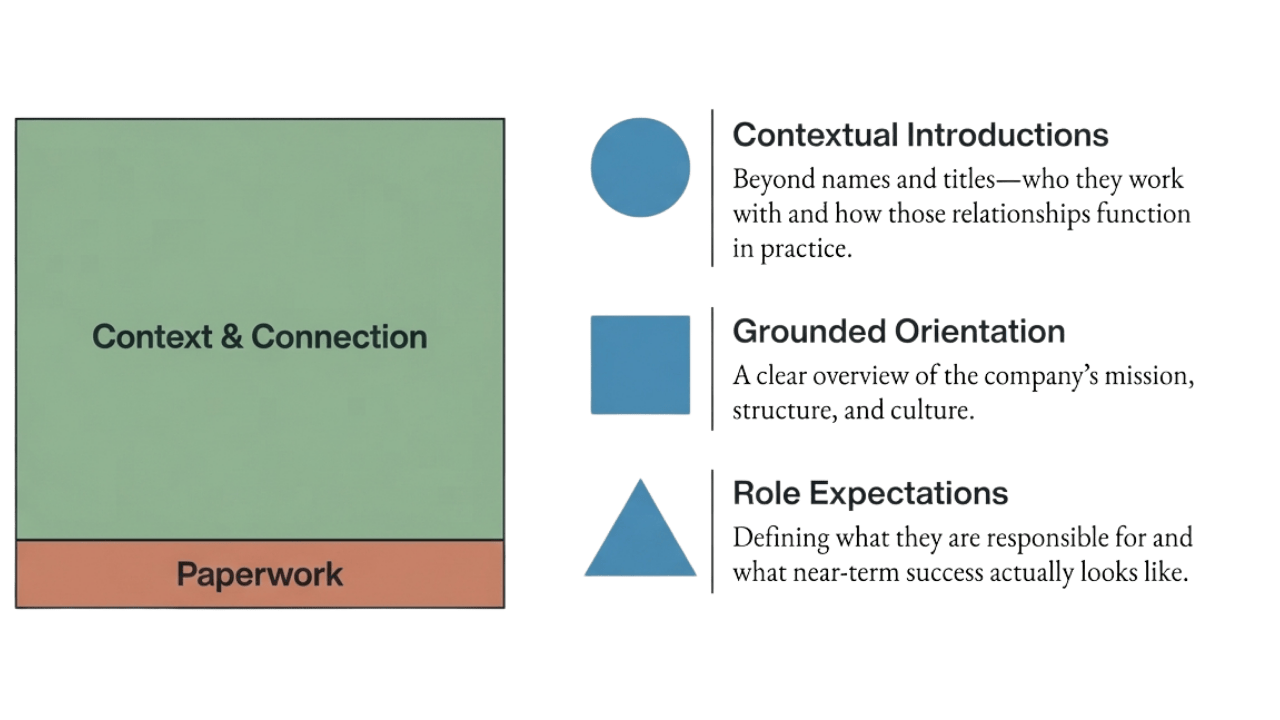
What good first-day onboarding covers:
- Introductions: Not just names and titles, but actual context—who the employee will work with regularly, what those working relationships look like in practice
- Orientation session: A grounded overview of the company's mission, structure, and culture
- Role expectations: What the employee is responsible for, what success looks like in the near term, what matters most in the first few weeks
The goal is to leave people feeling oriented. Not overwhelmed.
First week onboarding
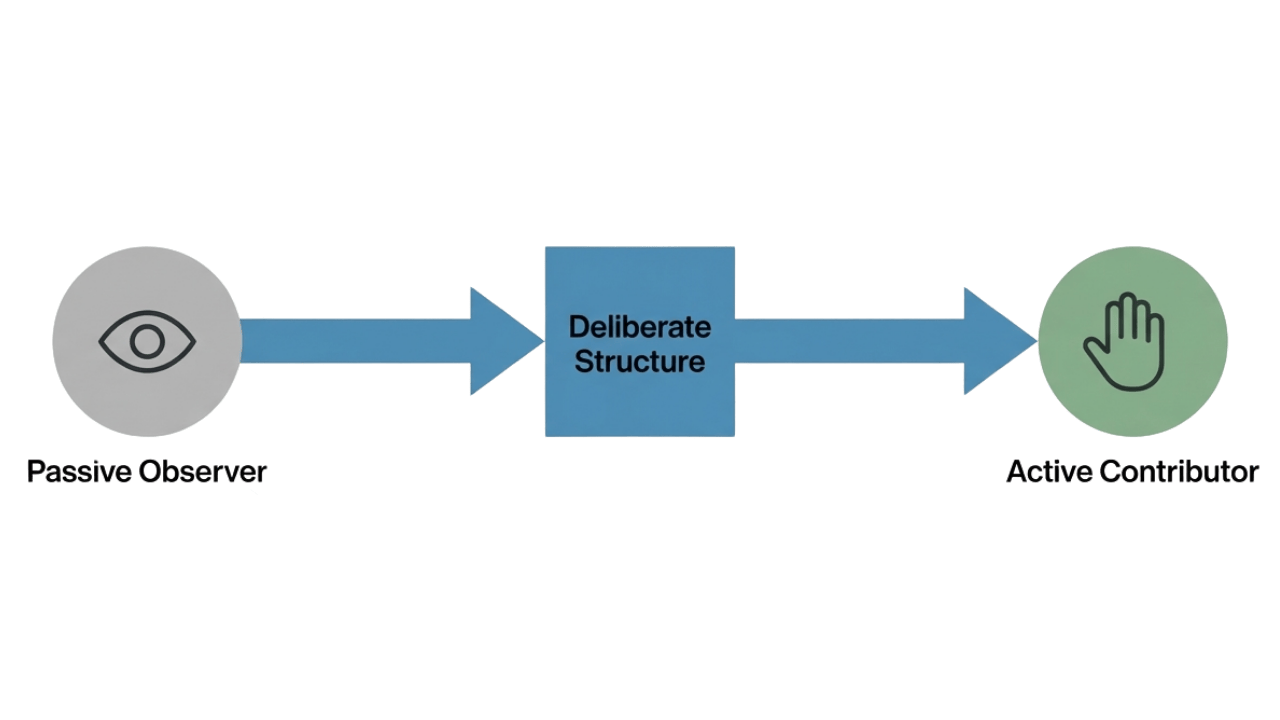
By the end of week one, employees should have a working sense of their role and enough confidence to start contributing, not just observing. That takes deliberate structure.
During this stage, organizations typically cover:
- Role-specific training: The actual tools, processes, and workflows the employee will use—not a generic overview.
- Culture introduction: How the team communicates, what good work looks like, what the unwritten rules are.
- Manager check-ins: These aren't formal reviews, they're just regular conversations that create space for questions and early course correction.
A well-structured first week turns observers into contributors. Give it structure, and it happens. Leave it to chance, and it usually doesn't.
30-60-90 day onboarding plan
The 30-60-90 day onboarding plan is one of the most practically useful onboarding frameworks because it takes implicit expectations and makes them explicit.
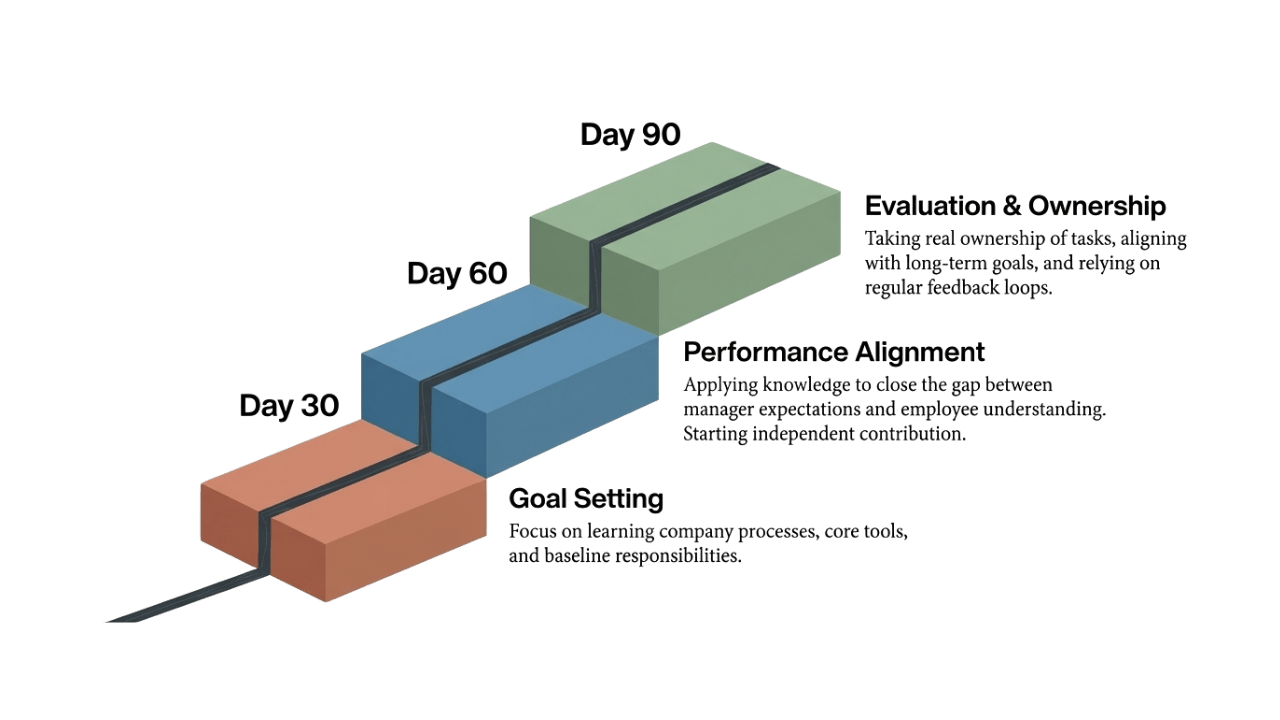
Three phases, each with a different focus:
- Goal setting: Defining what the employee should learn, contribute, and accomplish at each milestone
- Performance alignment: Closing the gap between what the manager expects and what the employee thinks their job actually is
- Feedback and evaluation: Regular conversations to catch issues early and recognize progress instead of waiting for a formal review cycle.
A structured 30-60-90 plan is how organizations keep onboarding from quietly dissolving after the first week ends.
Employee onboarding best practices
Strong onboarding isn't accidental. Organizations that consistently get it right start early, personalize the experience for different roles, and treat onboarding as an ongoing process rather than a first-week event.
Start onboarding before day one
Waiting until the first official day wastes valuable time. Preboarding—the window between offer acceptance and start date—is some of the highest-leverage time in the entire employee journey.
Use that window deliberately to:
- Send welcome emails and introductory materials.
- Share the first-week schedule and key contacts.
- Give access to essential documents and resources.
- Get accounts and tools set up before the person walks in.
Starting early reduces day-one anxiety and signals that the organization pays attention to details.
Assign an onboarding buddy
An onboarding buddy is an experienced employee who guides the new hire through their early weeks. Not a manager. Not HR. Someone who knows the culture from the inside, understands the real dynamics, and can field the questions a new employee might feel awkward raising through official channels.
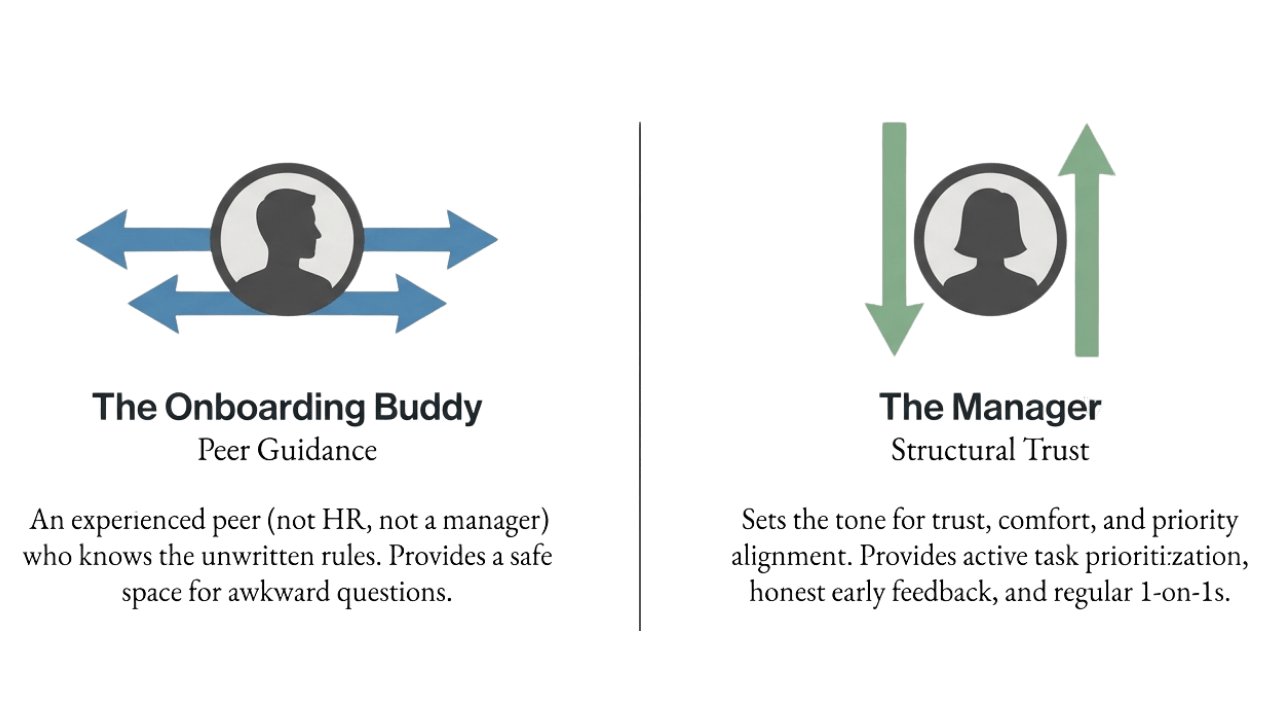
The payoff is real; faster team integration, stronger early relationships, less hesitation when something is unclear. Low cost, high impact.
Create a structured onboarding checklist
Without a checklist, onboarding depends entirely on whoever's managing it that week. Busy weeks? Steps get skipped. Manager turnover? Experiences become inconsistent.
A structured checklist makes the process repeatable regardless of who's running it. It should cover administrative documentation, role-specific training sessions, key meetings with managers and team members, tool and system access setup, and initial performance goals. That consistency—every new hire getting the same foundation—matters more than most organizations realize.
Personalize onboarding paths
The onboarding experience for a software engineer looks nothing like the one for a sales rep. Or it shouldn't, anyway. Generic programs that try to serve every role equally usually serve none of them well.
Personalizing the onboarding path means delivering role-specific training, focusing on tools and workflows relevant to a given position, and aligning learning to actual job responsibilities. People get applicable knowledge faster instead of sitting through irrelevant sessions while the training that actually matters gets pushed back.
Provide role-based training
One of the most important elements of new employee onboarding is making sure training connects to real work. Company overviews have their place. They can't substitute for training that's specific, practical, and immediately useful.
Role-based training covers the tools and software an employee will use daily, core workflows and processes, performance expectations, and best practices that apply to their specific function. Training built around a real role—rather than a generic template—is what actually shortens time to productivity.
Use digital onboarding tools
Modern onboarding runs on digital infrastructure. The right tools help automate repetitive tasks, deliver training consistently, and ensure that materials are accessible regardless of where or when someone is onboarding.
Learning management systems for structured training, HR software for document management, collaboration tools for early team integration, and knowledge bases for company policies—these tools, working together, reduce the manual overhead on HR teams and make the onboarding experience consistent across every hire.
Encourage manager involvement
Managers have more influence over onboarding outcomes than most frameworks give them credit for. The relationship a new hire builds with their manager in those first few weeks sets the tone for everything: How comfortable they feel asking questions, how aligned they are on priorities, how quickly trust gets established.
Manager involvement means regular one-on-ones, honest early feedback, clear communication about goals, and active help with task prioritization. Managers who treat onboarding as part of their job, not something HR handles, consistently get better results from the people they bring on.
Collect feedback regularly
Onboarding programs that never get updated quietly stop working. The only real way to improve them is to ask the people going through them what's actually happening.
Short surveys after week one or month one, informal manager conversations, structured review sessions—all of it surfaces insights that internal planning meetings can't produce. What did people feel prepared for? Where were they confused? That feedback, collected and acted on consistently, is how onboarding programs actually improve.
Track onboarding metrics
If you're not measuring onboarding, you're mostly guessing whether it works. Tracking the right metrics gives HR teams and managers something concrete to evaluate and improve against.
Worth tracking: time to productivity, retention rate among new hires, new hire satisfaction scores, and training completion rates. These numbers reveal whether onboarding is achieving its purpose—or just going through the motions.
Employee onboarding checklist
A structured checklist keeps the process consistent across different managers, teams, and hiring cycles. Without one, important steps get skipped—not because anyone is negligent, but because nothing is forcing them to happen.
Checklists also help employees know what's coming. That predictability alone reduces anxiety and builds early confidence.
Before day one
- Welcome email is sent with company intro and team context.
- First-day schedule is shared with the new hire.
- Employment documents and HR paperwork are completed.
- Company policies and guidelines are made accessible.
- Email accounts and communication tools are set up.
- Workstation, software access, and system credentials are ready.
- Introductory resources about company culture are shared.
Check these off before day one, and the first day can actually focus on onboarding—not logistics.
First day
- Employee is welcomed and introduced to the team.
- Company orientation session is conducted.
- Overview of company values and culture is provided.
- System logins and required tools are set up.
- Job responsibilities and expectations are reviewed.
- Onboarding buddy or mentor is assigned.
- Initial meetings with manager and key stakeholders are scheduled.
A calm, organized first day sets the tone for everything that follows.
First week
- Role-specific onboarding training is delivered.
- Key tools, systems, and workflows are introduced.
- Regular manager check-ins are scheduled.
- Important internal documentation and resources are shared.
- Team meetings are attended.
- Short-term goals and expectations are clarified.
- Questions are welcomed and guidance is provided.
By the end of week one, employees should be moving from "learning about the job" to "starting to do the job."
First 90 days
- Performance goals are defined for the first 30, 60, and 90 days.
- Ongoing training and skill development is provided.
- Regular performance discussions with the manager are scheduled.
- Feedback and coaching is offered.
- Cross-team collaboration is encouraged.
- Progress is evaluated and development opportunities are identified.
- Onboarding feedback review is conducted.
Employees supported through their first 90 days tend to stay longer and reach full productivity without burning out.
Common onboarding mistakes to avoid
Even organizations with good intentions can run onboarding that quietly fails. Poor or inconsistent onboarding sends a message before anyone says a word: Your start didn't matter enough to plan for.
Overwhelming new hires with too much information
Some organizations mistake volume for thoroughness. New employees end up buried under dense training materials, back-to-back meetings, and documentation no reasonable person could absorb in a week.
What follows is predictable: Important details get forgotten, people feel stressed rather than prepared, and the knowledge they actually needed doesn't stick because there was no room for it. The fix is spreading training across the entire onboarding process, letting people build knowledge gradually in a sequence that mirrors how the work actually unfolds.
No structured onboarding plan
Onboarding without a plan means different employees get different experiences depending on who's managing them that week. Some get thorough training and clear expectations. Others get a desk and a vague "let us know if you need anything."
A defined onboarding checklist and staged process solves this. It's the difference between onboarding that works because someone built it to work, and onboarding that works only when someone happens to have time for it.
Not collecting feedback from new employees
Most organizations build their onboarding programs and then leave them untouched for years. The employees going through those programs—the ones who could say whether any of them actually work—are rarely asked.
Regular feedback surfaces training gaps, identifies materials that aren't landing, and flags concerns early enough to act on them. Short surveys, informal check-ins, and structured feedback sessions all reshape a program more effectively than internal planning discussions.
Poor communication during onboarding
Unclear or inconsistent communication is one of the fastest ways to undermine otherwise decent onboarding. New employees who aren't sure what's expected of them—or who get conflicting information from different people—lose confidence quickly, and their productivity suffers for it.
What actually fixes it: Consistent manager check-ins, plainly stated job responsibilities, and a real open channel where new employees can ask questions without feeling like a burden.
Employee onboarding examples
The organizations that get onboarding right don't treat it as administrative overhead. They treat it as a deliberate investment in how quickly new employees contribute, how long they stay, and how connected they feel to the work.
Google's onboarding leans heavily on structure and peer support. Its best-known element is the "Noogler buddy". An experienced team member is assigned to guide new employees (through the company's culture and processes during their first weeks.
Beyond the buddy system, Google's onboarding sets clear role expectations from the start, provides structured training resources and documentation, and encourages early collaboration with teammates. The result is faster adaptation and a shorter ramp to productivity.
Netflix
Netflix takes a different angle. Rather than leading with rules and lengthy procedures, their onboarding centers on culture and autonomy, helping new hires understand how Netflix thinks about responsibility, decision-making, and freedom in practice.
New hires get a real introduction to company values, transparent communication about expectations, and encouragement to take ownership of work early. It's less about telling people what to do and more about helping them understand the why, which tends to produce more durable alignment than procedure-heavy onboarding.
Microsoft
Microsoft's onboarding is built around learning, mentorship, and sustained support. New hires get structured 30-60-90 day plans, access to internal learning platforms, mentorship programs, and regular manager check-ins.
The experience doesn't stop at orientation. It continues long enough for employees to actually understand their role, build relationships across the organization, and reach full performance with real support along the way.
All three companies share something in common; onboarding designed around what employees actually need, rather than what's easiest to administer.
How to measure onboarding success
Building a strong onboarding process matters, but knowing whether it's working matters just as much. Tracking the right metrics gives organizations a concrete picture of how well new hires are integrating and whether the process is doing what it was designed to do.
Time to productivity
Time to productivity measures how quickly a new employee moves from onboarding into genuine contribution. Good onboarding shortens this window by providing the right training and tools early—not retroactively, when the damage is already done.
Look at how quickly employees complete initial training, when they start handling responsibilities independently, and when they begin hitting early performance targets. If that window isn't shrinking over time, that's data worth paying attention to.
Employee retention
Retention among new hires is one of the clearest signals that onboarding is working. Many employees decide to stay or leave within their first 90 days. High turnover in that window typically points back to the onboarding experience.
Tracking new hire turnover in the first 90 days, retention rates through year one, and reasons people leave early can reveal patterns that would otherwise go unnoticed.
Onboarding satisfaction
Onboarding satisfaction captures how employees experienced the process themselves. It's a different signal from retention. Someone can stay and still have had a rough start. Short surveys after week one or month one, feedback forms on training sessions, and informal manager conversations all contribute to this picture.
High satisfaction scores typically indicate that onboarding felt helpful rather than performative or rushed.
Employee engagement
Early engagement predicts long-term commitment better than most early-stage metrics. People who feel connected to their team and clear about their role are more likely to stay motivated, contribute actively, and perform well.
Tracking participation in training and team activities, manager feedback, and engagement survey results gives HR teams the data needed to keep refining a program that earns its place in the budget.
Employee onboarding tools and software
Modern onboarding doesn't run on email threads and shared folders. It runs on purpose-built platforms that centralize training, automate manual tasks, and ensure that every employee gets a consistent experience regardless of team, role, or location.
Learning management systems (LMS)
An LMS is the backbone of most structured onboarding programs. It's where training lives; courses, videos, quizzes, documents are organized into structured learning paths that guide employees through onboarding in a logical sequence.
With an LMS, companies can deliver structured onboarding courses for new hires, provide training materials across formats, track course completion and learning progress, and maintain consistency across teams. Centralizing onboarding training removes the guesswork about whether employees got what they needed.
Training automation
Manual onboarding workflows—where HR manually assigns courses, sends reminders, and tracks completion—don't scale past a certain hiring volume. Training automation handles all of that in the background, without anyone having to remember to do it.
Automated systems assign onboarding courses the moment a new employee is added to the system, send reminders for incomplete modules, surface progress data through dashboards, and maintain standardized workflows across hiring cohorts. HR teams spend less time on logistics and more time on the parts of onboarding that require actual judgment.
Onboarding courses and structured learning paths
Structured onboarding courses give employees a clear path through the knowledge they need, rather than dropping a resource library in their lap and hoping they work through it in the right order. Organized learning paths guide employees through company culture and values training, role-specific modules, product or service knowledge, and compliance and policy requirements.
A well-structured learning path means that knowledge builds in an order that makes sense, each stage preparing employees for what comes next.
Using TrainerCentral for employee onboarding
Organizations that want structured onboarding training without stitching together multiple platforms often find a dedicated training tool is a better fit.
TrainerCentral is an all-in-one training platform that lets companies create and deliver onboarding programs through structured courses, live sessions, and digital learning resources, all managed from a single interface. Companies can design online onboarding courses for new employees, deliver live or recorded training programs, track learning progress and course completion, and maintain a centralized learning environment for ongoing employee development.
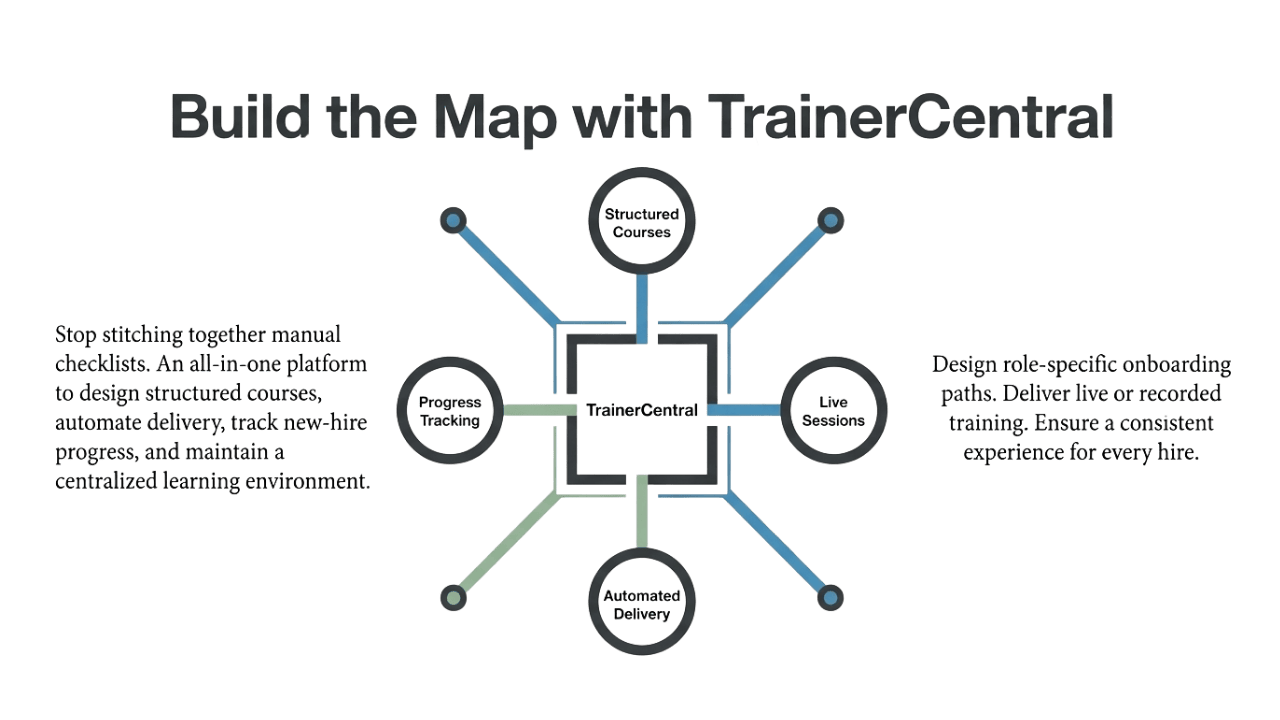
A dedicated learning platform means consistent delivery, easier management, and a faster path to productivity for new hires.
FAQ
How long should employee onboarding last?
Effective onboarding typically runs between 30 and 90 days, though some organizations extend programs up to six months depending on role complexity. Orientation might take a single day. Real onboarding—the kind that includes training, integration, and performance alignment—takes weeks. Programs that run longer tend to produce better retention and productivity outcomes. Cutting them short to save time tends to cost more in the long run.
What is the 30-60-90 onboarding plan?
A 30-60-90 day plan breaks the first three months into three distinct phases, each with its own expectations and focus. The first 30 days is learning company processes, tools, and responsibilities. The next 30 days is applying that knowledge and starting to contribute independently. The final phase is taking real ownership of tasks and aligning with longer-term goals. This structure helps managers track progress and gives employees a clear sense of what's expected at each stage.
What is the difference between onboarding and orientation?
Orientation is the short introductory session that usually happens on day one: filling out paperwork, reviewing policies, making introductions. Necessary, but fairly limited in scope.
Onboarding is the longer process that follows: Building skills, understanding culture, developing relationships, and getting to the point where an employee can do their job well without constant guidance. Orientation is the entry point. Onboarding is everything that makes that entry stick.
What should be included in onboarding training?
Effective onboarding training should cover the company's mission, values, and culture; role-specific tools and workflows; product or service knowledge relevant to the employee's function; compliance and company policies; and how the team collaborates day-to-day. The best onboarding training is specific enough to be immediately useful, not so broad it could apply to anyone.
What tools are used for employee onboarding?
Most organizations use a combination of tools, such as learning management systems for structured training, HR software for managing documentation, collaboration tools for team integration, and knowledge bases for policies and internal resources. The specific stack matters less than whether the tools work together smoothly and make the experience consistent and trackable.
How can companies improve their onboarding process?
The organizations that improve onboarding fastest tend to follow a few consistent practices. Start before day one, build a clear checklist, provide role-based training, assign mentors or buddies, and collect feedback from the people going through the process. That last one is often the most neglected—and the most useful. Onboarding programs improve when someone regularly asks "Is this working?" and does something with the answer.
Conclusion
A well-designed onboarding process pays off in a few concrete ways, such as shortening the time to productivity, less early turnover, and early engagement that actually carries forward.
This guide covered the practices that make the biggest difference: Starting before day one, building structured training paths, assigning onboarding buddies, using digital learning platforms, and measuring outcomes instead of just running through a checklist and calling it done.
A structured checklist, organized across preboarding, day one, the first week, and the first 90 days, ensures that every new hire gets the same intentional start. And when onboarding programs are regularly reviewed and improved based on real feedback, they stop being something HR manages and start being something the whole organization benefits from.
Build structured onboarding training with TrainerCentral and help every new hire hit the ground running.